API Penetration Testing: The Complete Guide to Securing REST, GraphQL, and gRPC Endpoints
Pentestas Team
Security Analyst

💫 Key Takeaways
- APIs account for over 80% of web traffic but receive less than 10% of security testing budgets at most organizations
- The OWASP API Security Top 10 is dominated by authorization flaws — Broken Object Level Authorization (BOLA) alone accounts for roughly 40% of critical API findings in our engagements
- Automated API scanners miss business logic vulnerabilities, chained exploits, and context-dependent authorization failures that manual testing consistently uncovers
- GraphQL and gRPC introduce unique attack surfaces (introspection leaks, query depth attacks, protobuf injection) that traditional web app testing methodologies don't address
- A professional API penetration test typically costs $4,000–$15,000 and takes 1–3 weeks depending on the number of endpoints and complexity of business logic

In March 2026, a mid-size fintech company learned an uncomfortable truth: the API powering their mobile banking application had been leaking customer account balances to any authenticated user who modified a single parameter in the request URL. The vulnerability — a textbook Broken Object Level Authorization (BOLA) flaw — had been present since the API's initial launch 14 months earlier. No automated scanner had ever flagged it. No code review had caught it. It took a manual penetration tester less than 20 minutes to discover and exploit it.
This scenario is not unusual. APIs are the connective tissue of modern software — they power mobile applications, single-page web apps, partner integrations, IoT devices, and internal microservices. They are also, by design, highly structured and well-documented attack surfaces. When an API exposes a predictable endpoint pattern like /api/v1/users/{id}/accounts, attackers know exactly what to manipulate.
Yet most organizations treat API security as an afterthought. They invest heavily in web application firewalls and network security while leaving their APIs — the primary interface through which sensitive data actually moves — without professional security testing.
This guide covers everything you need to know about API penetration testing: what it tests, how it works, what the OWASP API Top 10 means in practice, and how to prepare for and evaluate a professional engagement.
The Attack Surface
Why APIs Are Now the Primary Target for Attackers
The shift to API-first architecture has fundamentally changed the threat landscape. A decade ago, attackers targeted web application frontends — login forms, search fields, file uploads. Today, the frontend is often a thin client that delegates all logic and data access to backend APIs. The APIs are the application.
This creates a unique security challenge. Unlike traditional web applications where the server controls what data the user sees, APIs return raw data and trust the client to display it appropriately. When a mobile app calls GET /api/v1/account/details, the API returns the full data payload. If the authorization check is flawed or missing, the attacker gets the raw data — no screen scraping or HTML parsing required.
Consider the numbers from our own engagement data over the past 24 months:
| Metric | Finding |
|---|---|
| APIs with at least one critical vulnerability | 68% of all APIs tested |
| Most common critical finding | Broken Object Level Authorization (BOLA) |
| Average critical findings per engagement | 3.4 critical, 7.2 high severity |
| Vulnerabilities missed by prior automated scans | 91% of business logic flaws |
| Average time to find first critical issue | Under 4 hours of manual testing |
The pattern is clear: APIs are being deployed faster than they are being secured. DevOps teams ship new endpoints weekly. Security testing, if it happens at all, is an annual checkbox exercise that barely scratches the surface.

The OWASP API Security Top 10
The Vulnerabilities That Matter Most — and What They Look Like in Practice
The OWASP API Security Top 10 (2023 edition) provides the industry-standard taxonomy for API vulnerabilities. But the list alone doesn't tell you what these vulnerabilities look like in real applications. Here's what we actually find during engagements:
API1: Broken Object Level Authorization (BOLA). The single most dangerous and most common API vulnerability. It occurs when an API endpoint accepts an object identifier (user ID, order number, account reference) and fails to verify that the authenticated user has permission to access that specific object. An attacker changes /api/orders/1234 to /api/orders/1235 and gets another user's order. In our experience, roughly 40% of all critical API findings fall into this category.
API2: Broken Authentication. Weak token generation, missing token expiration, credential stuffing vulnerabilities, JWT algorithm confusion attacks, and insecure password reset flows. We regularly find APIs that accept expired tokens, fail to invalidate tokens after password changes, or use symmetric JWT signing that allows attackers to forge tokens.
API3: Broken Object Property Level Authorization. The API returns more data than the client needs or allows users to modify properties they shouldn't. A user profile endpoint that returns the user's role field, allowing an attacker to see — or worse, modify — their own privilege level through mass assignment.
API4: Unrestricted Resource Consumption. Missing rate limiting, no pagination caps, or computationally expensive operations without throttling. GraphQL APIs are particularly susceptible — a single deeply nested query can consume enormous server resources.
API5: Broken Function Level Authorization. Regular users accessing administrative endpoints. We find this frequently when admin and user APIs share the same codebase but rely on client-side checks to hide admin functionality. The endpoints are still accessible if you know the URL pattern.
API6: Unrestricted Access to Sensitive Business Flows. APIs that allow automated abuse of business logic — mass account creation, coupon enumeration, inventory hoarding, or automated bidding. These require understanding the business context to identify, which is why automated scanners miss them entirely.
API7: Server-Side Request Forgery (SSRF). APIs that fetch external resources based on user-supplied URLs can be tricked into accessing internal services, cloud metadata endpoints (169.254.169.254), or other protected resources.
API8: Security Misconfiguration. Missing security headers, verbose error messages that leak stack traces, default CORS policies that accept any origin, and unnecessary HTTP methods enabled. These findings are common and often easy to fix, but they provide attackers with valuable reconnaissance data.
API9: Improper Inventory Management. Exposed debug endpoints, old API versions still running with known vulnerabilities, undocumented endpoints that bypass security controls. Shadow APIs — endpoints that exist but aren't in any documentation — are surprisingly common in microservice architectures.
API10: Unsafe Consumption of Third-Party APIs. When your API trusts data from third-party services without validation, a compromised upstream service can inject malicious data into your system. This is increasingly relevant in the era of API-first integrations and webhook-driven architectures.
Why this matters for choosing a provider: A quality API penetration test covers all ten categories with manual testing. If a provider's sample report only shows automated scan results (missing CORS headers, outdated TLS versions), they are not performing genuine API penetration testing. The high-value findings — BOLA, business logic flaws, authorization bypasses — require human expertise.
The Methodology
How Professional API Penetration Testing Actually Works
A thorough API penetration test follows a structured methodology, but the value lies in the manual expertise applied at each phase. Here's what each stage involves:
Phase 1: Reconnaissance and API Discovery (Day 1–2). The tester begins by mapping the complete API surface. This includes reviewing API documentation (Swagger/OpenAPI specs, GraphQL schemas, Postman collections), crawling the application to discover undocumented endpoints, analyzing mobile app binaries for hardcoded API calls, and examining JavaScript bundles for hidden routes. The goal is to find every endpoint, including those the development team may have forgotten about.
Phase 2: Authentication and Session Testing (Day 2–3). Every authentication mechanism is tested systematically: token generation entropy, session fixation, credential stuffing resilience, OAuth/OIDC flow vulnerabilities, JWT implementation flaws (algorithm confusion, weak signing keys, missing expiration), API key management, and multi-factor authentication bypass techniques. The tester creates multiple test accounts with different privilege levels to test horizontal and vertical access controls.
Phase 3: Authorization Testing (Day 3–5). This is where manual testing delivers the most value. Every endpoint that accepts an object identifier is tested for BOLA by swapping IDs between accounts. Every data modification endpoint is tested for mass assignment by injecting additional properties. Every role-restricted function is tested for privilege escalation. This phase cannot be meaningfully automated because it requires understanding the business context — what data should user A be able to access versus user B?
Phase 4: Business Logic Testing (Day 5–7). The tester analyzes the application's business workflows through the API: Can payment amounts be manipulated? Can order quantities be set to negative values? Can promotional codes be applied multiple times? Can the two-step verification flow be bypassed by calling step 2 directly? These tests are entirely specific to your application and cannot be covered by any generic scanner or checklist.
Phase 5: Input Validation and Injection (Day 7–8). Standard injection testing adapted for API contexts: SQL injection through API parameters, NoSQL injection (MongoDB operator injection), command injection via file processing endpoints, SSRF through URL parameters, XXE in XML-accepting endpoints, and GraphQL-specific attacks like query batching, alias-based DoS, and introspection data extraction.
Phase 6: Reporting and Remediation Guidance (Day 8–10). Each finding is documented with full reproduction steps, impact analysis, CVSS scoring, and specific remediation code examples. Critical and high-severity findings are reported immediately during the engagement — we don't wait for the final report to tell you about a vulnerability that's actively exploitable in production.
Protocol-Specific Risks
REST vs. GraphQL vs. gRPC: Different Protocols, Different Attack Surfaces
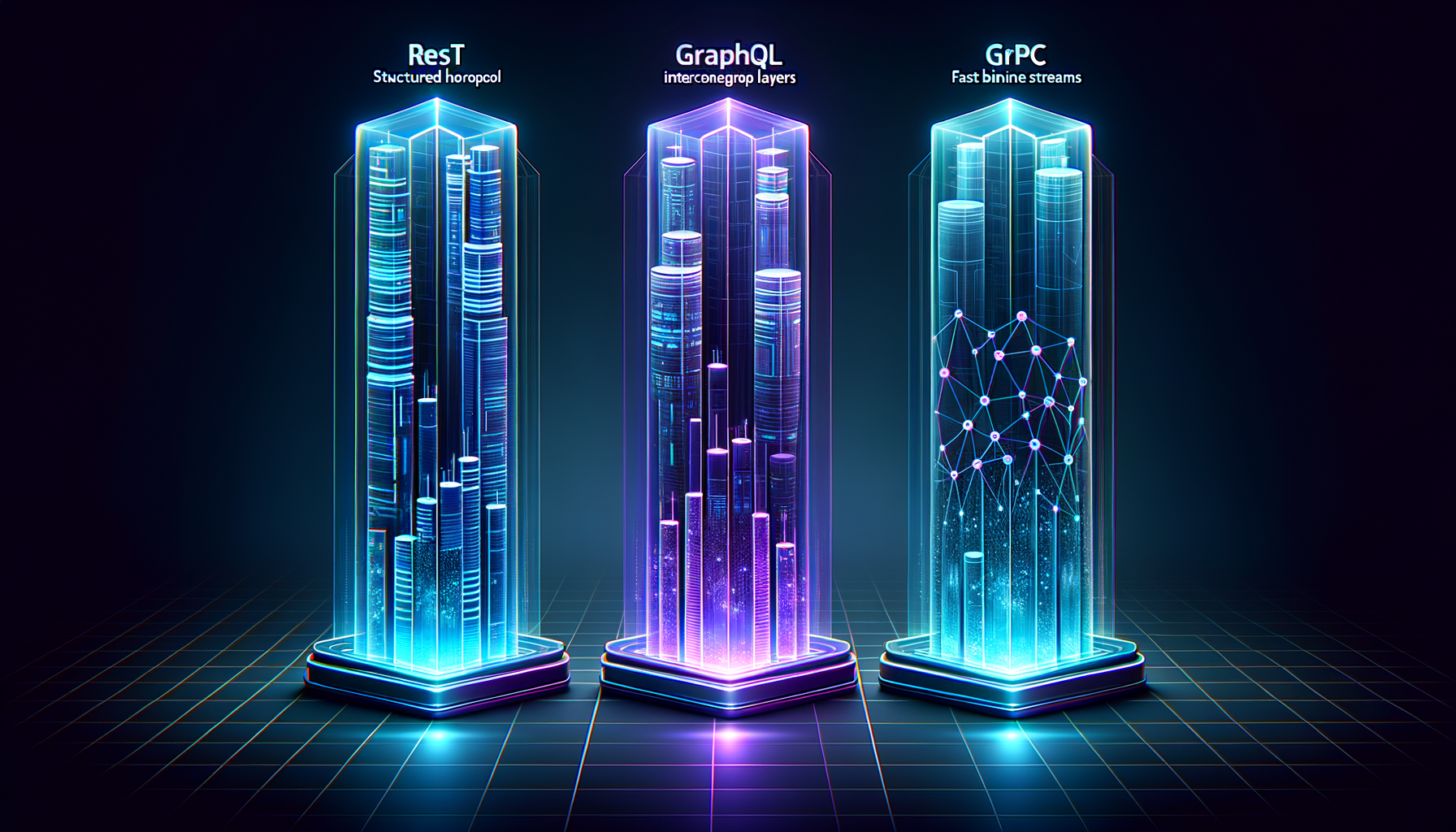
Not all APIs are equal from a security testing perspective. Each protocol introduces unique attack surfaces that require specialized testing approaches:
| Concern | REST | GraphQL | gRPC |
|---|---|---|---|
| Authorization model | Per-endpoint middleware | Per-resolver (often inconsistent) | Per-method interceptors |
| Data exposure risk | Over-fetching via fixed response schemas | Client-controlled queries can extract unintended fields | Protobuf schema defines strict contracts |
| DoS vectors | Large payload requests, pagination abuse | Deeply nested queries, alias-based batching, fragment cycles | Large streaming messages, connection exhaustion |
| Unique attack surface | HTTP verb tampering, parameter pollution | Introspection schema exposure, query complexity attacks | Protobuf deserialization, reflection service exposure |
| Discovery difficulty | Predictable URL patterns (easy to enumerate) | Single endpoint, but full schema available via introspection | Binary protocol requires special tooling to inspect |
GraphQL deserves special attention. Its flexibility is a double-edged sword. While it solves over-fetching problems for developers, it creates new security challenges. If introspection is enabled in production (which it is, in roughly 60% of the GraphQL APIs we test), attackers can retrieve the entire schema — every type, every field, every mutation — giving them a complete map of your data model. Query depth limiting, query cost analysis, and field-level authorization are essential controls, yet most GraphQL implementations we assess lack at least one of them.
gRPC is often assumed to be secure by default because it uses binary serialization and is typically deployed for internal service-to-service communication. This assumption is dangerous. We've found gRPC reflection services exposed to the internet (giving attackers full method discovery), missing authentication on internal-only methods that became externally reachable after a load balancer change, and protobuf deserialization vulnerabilities that allowed arbitrary data injection. If your gRPC services are reachable from the internet — even indirectly through an API gateway — they need testing.
Case Study
How a BOLA Vulnerability Exposed 2.3 Million User Records
A healthcare SaaS company — let's call them MedPortal — had been running annual web application penetration tests for three years. Their reports consistently came back with low-severity findings: missing security headers, information disclosure in error messages, and a few outdated JavaScript libraries. Leadership was confident in their security posture.
When they engaged us for their first dedicated API penetration test, the picture changed dramatically within the first day. Their patient portal API used sequential integer IDs for patient records. The endpoint GET /api/v2/patients/{patientId}/records checked that the requesting user was authenticated but did not verify that the authenticated user was authorized to view that specific patient's records. Any authenticated user — including patients with basic portal access — could enumerate and download every patient record in the system.
The vulnerability was critical: 2.3 million patient records containing names, dates of birth, diagnoses, medications, and insurance information were accessible. The HIPAA implications alone were severe.
Why had three years of penetration tests missed this? Because those engagements tested the web application — the login page, the UI, the form submissions — not the underlying API. The frontend application correctly restricted users to their own records. But anyone with a tool like Burp Suite or even cURL could call the API directly and bypass the frontend's restrictions entirely.
The lesson: Web application penetration tests and API penetration tests are different engagements that test different things. A web app pentest examines the user interface and its interactions with the server. An API pentest examines the API directly, independent of any frontend. If your application has an API (and nearly all modern applications do), you need both.
Getting Ready
How to Prepare for Your First API Penetration Test
The quality of an API penetration test depends significantly on the information you provide upfront. Here's what to prepare:
1. API documentation. Swagger/OpenAPI specifications, Postman collections, GraphQL schema files, or gRPC proto definitions. If your API isn't documented, the testing team will need additional time for discovery, which adds cost. Even incomplete or outdated documentation is better than none.
2. Test accounts with different roles. Provide at least two accounts for each distinct user role in your application. The testers need to verify that User A cannot access User B's data, and that a regular user cannot perform admin functions. If your API serves multiple user types (end-user, admin, partner, internal service), accounts for each type are essential.
3. Authentication details. How does your API authenticate requests? API keys, JWT tokens, OAuth 2.0 flows, session cookies, client certificates, or a combination? Provide the details so testers can focus on finding vulnerabilities rather than figuring out how to log in.
4. Environment details. Provide a staging or pre-production environment that mirrors production. Testing on production is possible (and sometimes necessary), but a staging environment allows more aggressive testing without risk to real user data.
5. Business context. What does your API do? What data is most sensitive? What business operations are most critical? This context helps testers prioritize their efforts and focus on the scenarios that would cause the most damage if exploited.
6. Scope definition. Define what's in scope (specific APIs, versions, environments) and what's out of scope (third-party integrations, specific endpoints in active development). Clear scope prevents misunderstandings and ensures the engagement covers what matters most.
Choosing a Provider
What Separates a Quality API Pentest from a Glorified Scan
The API penetration testing market ranges from automated scanning tools repackaged as "pentests" to genuine manual testing by experienced security engineers. Here's how to tell the difference:
Ask for a sample report. A quality report includes detailed reproduction steps for each finding, impact analysis specific to your business context, and remediation guidance with code examples. If the sample report is mostly automated scanner output (color-coded severity charts, generic recommendations like "update to the latest version"), you're buying a scan, not a pentest.
Ask about their methodology for BOLA testing. Since BOLA is the most common and most impactful API vulnerability, the provider should have a clear, manual process for testing every endpoint that handles object references. If they can't explain this in detail, they likely aren't doing thorough authorization testing.
Ask about GraphQL and gRPC experience. If your API uses these protocols, ensure the provider has specific experience testing them. Standard web application testing tools don't handle GraphQL query complexity analysis or gRPC binary protocol inspection without significant customization.
Ask about business logic testing. Will they test your specific business workflows for logical flaws? A provider that only checks the OWASP Top 10 without understanding your business processes will miss the vulnerabilities that are most likely to cause real damage.
Ask about retesting. After you remediate the findings, you need verification that the fixes are effective. Quality providers include complimentary retesting in their engagement. If retesting is an additional cost, factor that into your budget comparison.
Red flags in API pentest proposals:
• Engagement duration under one week for more than 50 endpoints
• No mention of multi-role authorization testing
• Price under $3,000 (likely automated scanning only)
• No request for API documentation or test accounts during scoping
• Final report delivered more than 5 business days after testing ends

Ready to Test Your APIs?
We provide manual-first API penetration testing for REST, GraphQL, and gRPC endpoints. Fixed-price proposals, critical findings reported immediately, and complimentary retesting included. No automated scanner repackaging — just expert analysis of your API security.
Get a Free API Security ConsultationWhy this matters when buying pentesting-as-a-service
Pentestas is a pentesting-as-a-service offering — an AI penetration testing system that scans web apps, APIs, mobile binaries, cloud accounts, and internal networks under one platform. We default to penetration testing with Claude for triage and exploit-chain narration, and switch to penetration testing with DeepSeek for cost-sensitive bulk passes; both modes go through the same accuracy gate, the same destructive-payload guard, and the same reporting pipeline so a B2B SaaS pentest you run today and one you run six months from now produce comparable, auditable results.
If you've previously bought one-off engagements and you're comparing them against penetration testing with AI, the trade-offs in this post are the ones to read against your last consulting report.
- Mobile App Penetration Testing: A Complete Guide for iOS and Android Security
- SOC 2 Penetration Testing for SaaS Companies: Requirements, Process, and How to Pass Your Audit
- Cloud Penetration Testing: How to Secure Your AWS, Azure, and GCP Environments
- SaaS Penetration Testing: Why Multi-Tenant Platforms Need Specialized Security Testing

Alexander Sverdlov
Founder of Pentestas. Author of 2 information security books, cybersecurity speaker at the largest cybersecurity conferences in Asia and a United Nations conference panelist. Former Microsoft security consulting team member, external cybersecurity consultant at the Emirates Nuclear Energy Corporation.