B2B SaaS Pentest vs Generic Web-App Pentest: What's Actually Different
Pentestas Team
Security Analyst
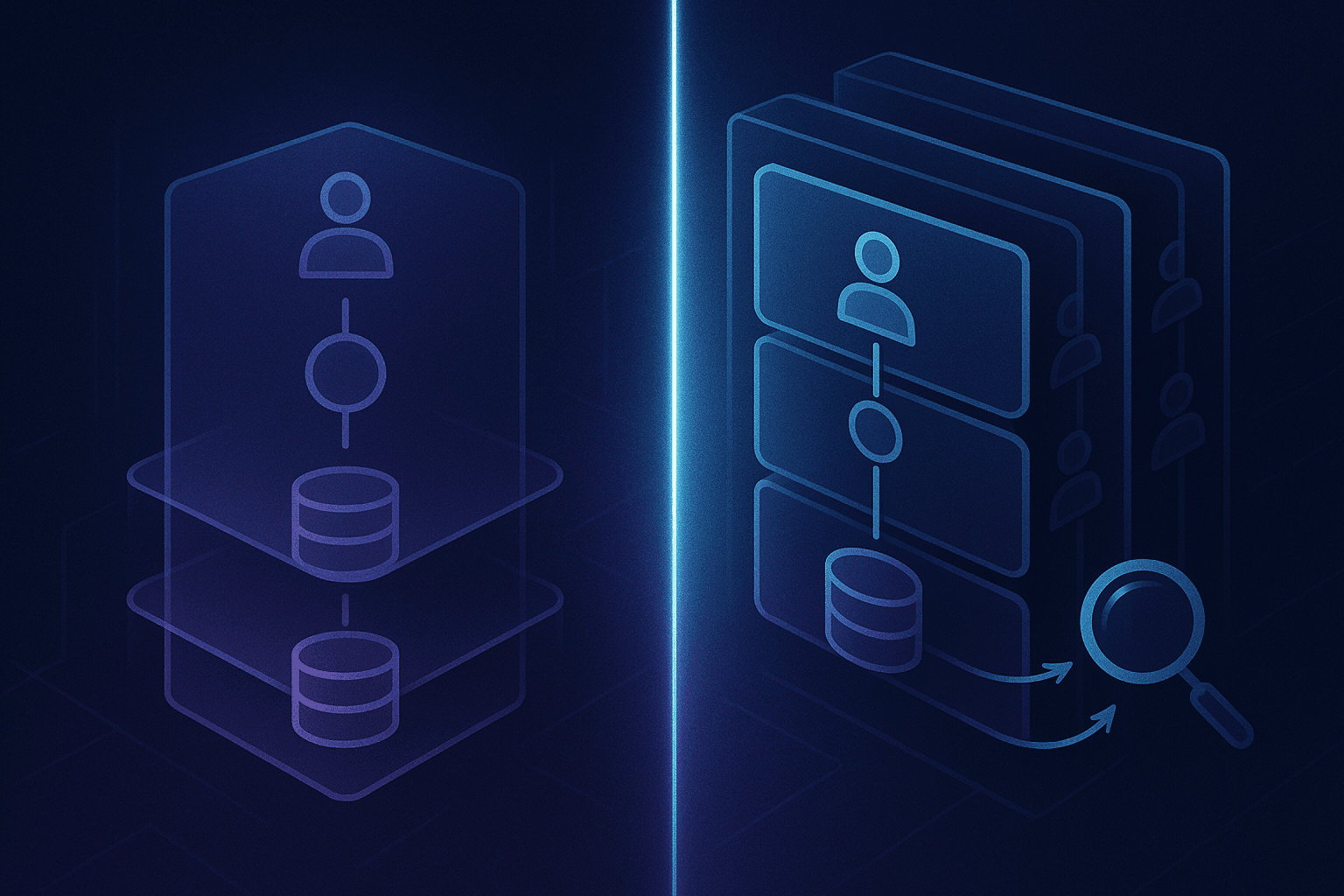
The two shapes look identical on a price sheet. They aren't.
A generic web-app pentest assumes one user, one session, one data shell. The deliverable is an OWASP-Top-10-ish report. The provider proves they tested authentication, input validation, session management, common injection classes, business logic on the user-facing workflows, and the usual cluster of HTTP-header hygiene issues. That's a valid product. It's the right product for a single-tenant SaaS, a brochureware site, an internal admin tool, a custom in-house application.
A B2B SaaS pentest is a different product on a different surface area. Almost everything that goes catastrophically wrong on a multi-tenant SaaS is sitting one architectural layer up from what the generic pentest probes. The buyer who confuses the two ends up with a clean report and a CRITICAL cross-tenant data leak in the wild within six months.
Side-by-side coverage
| Bug class | Generic web-app pentest | B2B SaaS pentest |
|---|---|---|
| SQL injection / XSS / SSRF / RCE (in-app) | ✓ | ✓ |
| Standard auth / session / CSRF | ✓ | ✓ |
| Cross-tenant IDOR / BOLA | ✗ (usually missed) | ✓ (default scope) |
| SCIM provisioning replay / role mapping | ✗ | ✓ |
| SAML/OIDC assertion abuse → cross-tenant impersonation | ✗ | ✓ |
| Admin-impersonation surface (login-as-customer) | ✗ | ✓ |
| API-key / webhook scope bleed between tenants | ✗ | ✓ |
| Object-storage path segregation (S3 / GCS / Azure) | Partial | ✓ |
| Audit-log integrity / forgery | ✗ | ✓ |
| Background-job payload spillage | ✗ | ✓ |
| Supabase RLS / Firestore rules / BaaS misconfig | ✗ | ✓ |
| Compliance-control mapping in report (SOC 2/ISO/PCI) | Sometimes | ✓ |
Why the gap exists
The gap is structural, not lazy. Generic web-app pentest engagements are scoped around one logged-in user. The tester walks the application, attacks the surfaces that user can reach, and reports what they find. Multi-tenant bug classes — by definition — require two simultaneous sessions from two different organisations to even detect. That's why most B2B SaaS pentest providers have a per-engagement upcharge for “multi-role testing” or “tenant boundary review”: it's strictly more setup, more credentials, more harness work. If your provider doesn't break it out, ask explicitly whether they actually log in as two tenants concurrently and probe the cross-organisation API surface. If they don't, the report you'll get is a generic web-app pentest with a B2B SaaS label.
Cost economics — why the gap doesn't close itself
The multi-tenant scope adds 30-60% to engagement cost under the boutique-consultancy model. That's two-to-five additional consultant-days per engagement: setup, harness scripting, two-tenant authentication, manual cross-org probe, reporting overhead. For a Series-A B2B SaaS that's a $25,000 engagement turning into a $35,000-$45,000 engagement, and the math is what kills the cadence — most teams run it once a year because they can't run it any more often than that.
Penetration testing with AI doesn't have that economics problem. The harness setup is amortised once across every customer. The two-tenant probe runs as part of the default scope. The unit cost per cross-tenant BOLA finding drops from ~$5,000 of consultant time to ~$5 of compute. That's the actual reason an AI penetration testing system is the right answer for the recurring B2B SaaS pentest rhythm — not because it's smarter than the consultants, but because it doesn't have to charge for the setup time.
The hybrid model that actually works
For most B2B SaaS products, the right buying shape isn't “pick one.” It's:
- Pentesting-as-a-service subscription, continuously. Every release, every environment, every multi-tenant primitive — covered. Penetration testing with AI handles the bulk of the surface: tenant-boundary probes, BaaS misconfig (Supabase RLS, Firestore rules, S3 listability), standard injection classes, dependency CVEs, hardening hygiene.
- Boutique-consultancy manual engagement once per year on the highest-risk flow — typically the admin-impersonation surface and the data-export pipeline. A named human probes the parts where business logic is too bespoke for automated coverage to reliably hit.
- Compliance-grade evidence chain on every pentest result, manual or automated. PDF + JSON + SARIF + DOCX, controls mapped to SOC 2 / ISO 27001 / PCI / HIPAA / GDPR / NIST. This is what your enterprise prospect's procurement reviewer actually opens.
The math: continuous PTaaS at $300-$1,500/month + one focused $15-25k manual engagement per year ≈ $25-43k/year total. That is less than a single annual boutique engagement at $35-50k AND you get continuous coverage between the two checkpoints.
What “multi-tenant coverage” should actually mean on a vendor data sheet
When you read “multi-tenant coverage” in a pentest data sheet, here's what each provider should actually be doing under the hood — anything less and the line is marketing, not coverage:
- Concurrent authenticated sessions for two test tenants (Org-A and Org-B), each with at least one member and one admin role.
- Cross-org probe on every identified API endpoint that includes a tenant identifier in path / header / body: replay the Org-A request from the Org-B session and verify the server returns 401/403/404 — not Org-A data.
- Cross-org probe on signed-URL endpoints — verify a download link generated for Org-A can't be reused from an Org-B session.
- Cross-org SCIM enumeration — verify the SCIM /Users and /Groups endpoints scoped to Org-A can't be queried by an Org-B-issued token.
- Admin-impersonation audit-trail integrity — verify that the “login as customer” surface (a) requires explicit cross-tenant authorisation, (b) doesn't expose end-user PII to the impersonating admin beyond what's policy-approved, (c) writes an immutable audit-log entry that the customer can verify.
- BaaS-platform audit — for any Supabase / Firebase / Vercel / Netlify dependency, verify the project's RLS rules, Firestore security rules, and storage bucket ACLs are tight enough that an anonymous client with the public anon key can't read tenant data.
Where Pentestas fits in the hybrid model
Pentestas is a pentesting-as-a-service platform built for the multi-tenant SaaS shape. The AI penetration testing system at its core runs the cross-org BOLA, BaaS misconfig, storage-segregation, and SCIM-flow probes by default on every B2B SaaS pentest — not as a paid add-on. Penetration testing with Claude powers the analyst-grade reasoning over the multi-tenant evidence chain; penetration testing with DeepSeek powers the high-volume parallel verification across the API surface. Either backend lands findings in the same accuracy gate, the same dedup pipeline, and the same compliance-mapped report — so the evidence quality is comparable across model choices and across scans run six months apart.
If you're currently buying one $35k engagement per year and the calendar gap is hurting you, the hybrid model — Pentestas continuous + a focused human pass on the admin surface annually — is the right shape to evaluate next. Free tier includes 10 scans per month on a verified domain with the full multi-tenant scope, so you can validate the coverage against your real stack before committing to a paid plan.
Run a multi-tenant B2B SaaS pentest
Cross-org BOLA, SCIM replay, admin-impersonation, BaaS misconfig, storage segregation. Full coverage on the free tier.
Start scanning- B2B SaaS Pentest: What It Is, What It Costs, and When You Actually Need One
- SaaS Penetration Testing: Why Multi-Tenant Platforms Need Specialized Security Testing
- The B2B SaaS Pentest Checklist: Multi-Tenant Isolation, Auth, RLS, and the 47 Things That Actually Break
- BOLA + BFLA: Differential-Authorization Testing With Two Sessions, Not One

Alexander Sverdlov
Founder of Pentestas. Author of 2 information security books, cybersecurity speaker at the largest cybersecurity conferences in Asia and a United Nations conference panelist. Former Microsoft security consulting team member, external cybersecurity consultant at the Emirates Nuclear Energy Corporation.