HTTP Smuggling: How H2/H1 Downgrade Reveals Hidden Endpoints
Pentestas Team
Security Analyst
Understanding HTTP Smuggling and Protocol Downgrades
HTTP smuggling is a subtle yet powerful attack technique that exploits discrepancies in how HTTP headers are parsed by front-end and back-end servers. At its core, it involves crafting requests that are interpreted differently by these servers, potentially leading to unauthorized access or data leakage. The impact on web security can be profound, as attackers might bypass security controls, access restricted endpoints, or manipulate request queues, thus compromising the integrity and confidentiality of web applications.
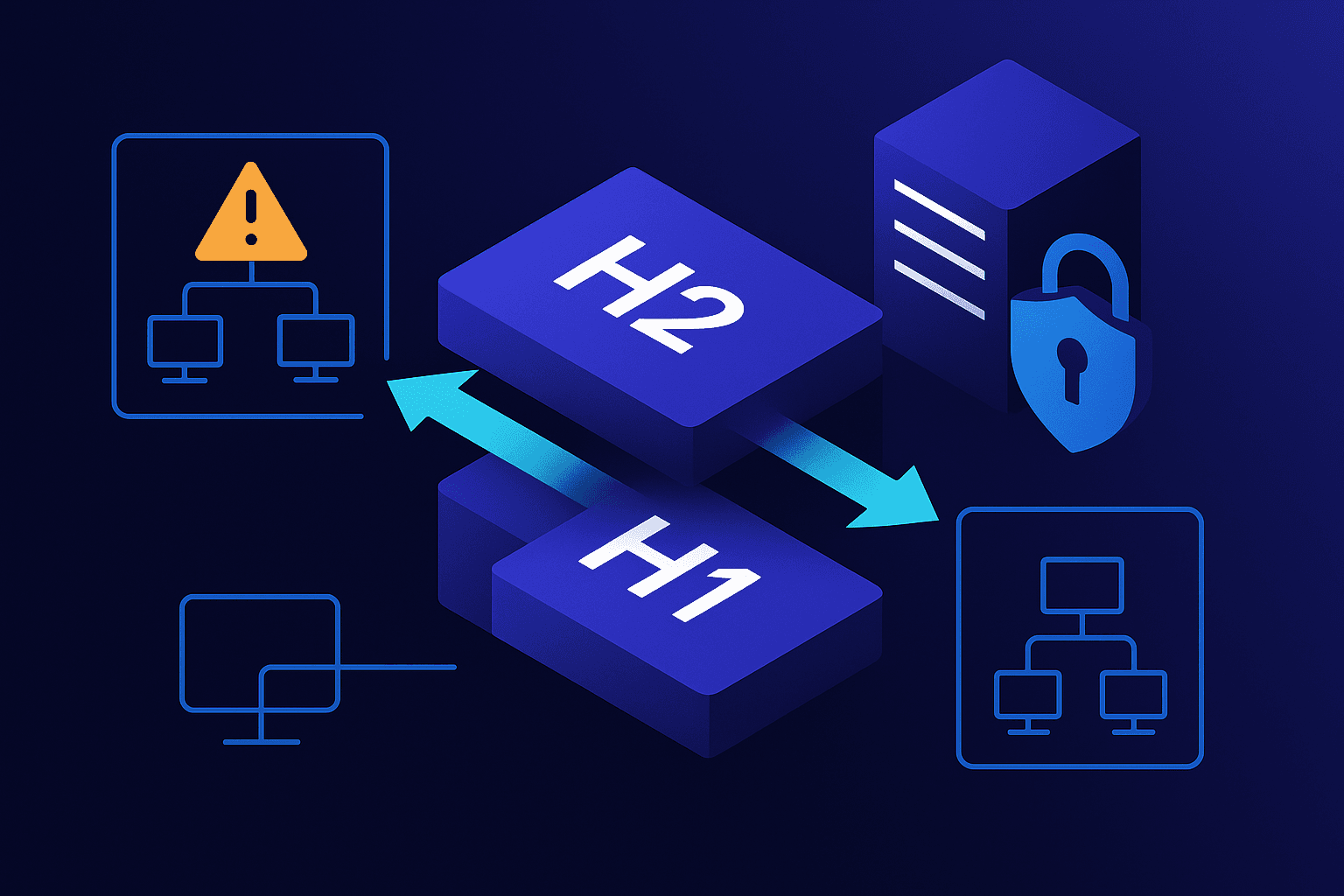
H2/H1 downgrades play a pivotal role in exposing vulnerabilities. When an HTTP/2 request is downgraded to HTTP/1.1, subtle differences in protocol handling may be exploited. For instance, HTTP/2 multiplexing capabilities are lost in HTTP/1.1, which can lead to misunderstandings in request boundaries. This is where attackers can inject additional requests, effectively smuggling them through unsuspecting back-end servers. The role of content-length and transfer-encoding headers, specifically CL.TE (Content-Length followed by Transfer-Encoding) and TE.CL (Transfer-Encoding followed by Content-Length), becomes crucial in these attacks.
POST / HTTP/1.1
Host: example.com
Content-Length: 13
Transfer-Encoding: chunked

0
SMUGGLED
The concept of edge cache poisoning is another critical aspect to consider. By manipulating headers during protocol downgrades, attackers can potentially poison cache entries at the edge, leading to the delivery of malicious content to users. This can have widespread implications, especially for content delivery networks (CDNs) that cache responses for performance enhancements. Understanding how request queue desynchronization occurs is also vital. When requests are processed asynchronously, any mismatch in expected request boundaries due to protocol downgrades can lead to a desynchronized state, paving the way for further exploitation by attackers.
The Mechanism of H2/H1 Downgrade Attacks
The H2 to H1 downgrade attack begins with a client initiating a connection using HTTP/2. During this interaction, an attacker exploits the transition to HTTP/1.1 by crafting requests that are processed differently by the two protocols. This can lead to a scenario where a request is parsed as multiple requests by HTTP/1.1, potentially allowing the attacker to smuggle malicious payloads past security controls. The attacker often manipulates the Content-Length header, resulting in a mismatch between intended and actual request boundaries.
Discrepancies in how HTTP/2 and HTTP/1.1 handle headers are a goldmine for attackers. For example, HTTP/2 allows for header compression, which, when not properly translated to HTTP/1.1, might cause an intermediary or backend server to misinterpret the request. Attackers can leverage these inconsistencies to bypass filters or inject unauthorized commands into the backend. Such attacks are particularly insidious as they exploit fundamental protocol differences that are not easily detectable by traditional security mechanisms.
Headers play a critical role in these attacks, with key headers like Transfer-Encoding and Content-Length being manipulated to create ambiguity in request parsing. This ambiguity is what allows the smuggled requests to sneak through undetected. A historical example includes the CVE-2020-11100, where attackers exploited these headers to execute cross-site scripting attacks on vulnerable web applications.
Case Study: CVE-2020-11100
In this case, the attackers used the lack of proper header validation between HTTP versions to bypass security controls, allowing them to execute XSS attacks. The incident highlighted the need for rigorous validation and consistent handling of HTTP headers across all versions.
The impact of H2/H1 downgrade attacks on server security can be severe. By executing these attacks, adversaries gain unauthorized access to sensitive data, inject malicious scripts, or disrupt service availability. This highlights a significant vulnerability in servers that support both HTTP/1.1 and HTTP/2 without proper handling mechanisms. As a result, organizations must ensure robust validation and consistent protocol handling to mitigate these risks. Regular updates and patches, alongside thorough testing of HTTP implementations, are essential to safeguarding against such sophisticated attacks.
Pentestas' Approach to Detecting Downgrade Vulnerabilities
At Pentestas, our architecture for detecting downgrade vulnerabilities begins with a robust server-client communication model. By simulating both HTTP/2 and HTTP/1.x requests, we can effectively analyze the transition points where downgrades may occur. This architecture is designed to capture subtle discrepancies that could indicate potential smuggling attacks. Our system logs every request and response header for further analysis, ensuring no detail is overlooked. With this setup, we continually monitor for patterns that suggest unauthorized endpoint exposure.
The integration of AI-driven algorithms into our detection process augments our ability to identify downgrade vulnerabilities. These algorithms are trained on a vast corpus of known exploits and can adapt to emerging threat patterns in real-time. By analyzing both historical data and live traffic, our AI models generate alerts when anomalies are detected. This proactive approach allows us to stay ahead of potential attackers and secure endpoints that might otherwise be compromised.
import requests

headers_h2 = {"Connection": "Upgrade", "Upgrade": "h2c"}
response = requests.get("http://example.com/resource", headers=headers_h2)

if "HTTP/1.1" in response.headers.get("Via", ""):
    print("Potential downgrade detected!")
Our automated scanning tools are fundamental in detecting vulnerabilities at scale. These tools employ a combination of static and dynamic analysis to scrutinize web traffic and identify potential downgrade points. By running continuous scans and comparing results over time, we can pinpoint inconsistencies that signal a vulnerability. The automated nature of these tools allows for swift action, minimizing the window of opportunity for attackers.
Machine learning plays a crucial role in refining our detection capabilities. As our models ingest more data, they better recognize false positives and learn to focus on genuine threats. This ongoing improvement enhances the accuracy of our alerts, providing us with precise data to inform our security strategies. Ultimately, the unique features of Pentestas, including our AI-driven insights and extensive scanning capabilities, empower us to deliver unparalleled security analysis and fortify our clients against downgrade vulnerabilities.
Implementing Proactive Security Measures with Pentestas
Preventing HTTP smuggling attacks requires a multi-layered approach. The first step is to ensure that HTTP headers are correctly validated and sanitized. This involves configuring both the client and server to reject malformed headers. Using reverse proxies like Nginx or HAProxy, administrators can enforce strict header validation rules. For example, setting proxy_set_header in Nginx can help mitigate header injection risks.
location / {
    proxy_pass http://backend;
    proxy_set_header Host $host;
    proxy_set_header X-Forwarded-Proto $scheme;
    proxy_set_header X-Forwarded-For $proxy_add_x_forwarded_for;
}
Pentestas plays a pivotal role in hardening server configurations by automating vulnerability scans and generating comprehensive reports. These reports highlight weak points in the server setup that could be exploited in HTTP smuggling attacks. Our platform integrates seamlessly with CI/CD pipelines, ensuring that security checks are part of the development lifecycle. This proactive approach minimizes the risk of vulnerabilities making their way into production environments.
Regular security audits and scans are crucial in maintaining a secure network. With ever-evolving threats, relying on static security measures is insufficient. Pentestas offers scheduled scans and real-time alerts that help organizations stay ahead of potential threats. Conducting these audits ensures that any configuration drift or newly introduced vulnerabilities are swiftly identified and addressed.
Continuous Monitoring for Threat Mitigation
Continuous monitoring is vital in mitigating threats as it provides real-time insights into network activity. Pentestas enables organizations to set up custom alerts for unusual patterns, such as unexpected HTTP methods or repeated failed authentication attempts. This constant vigilance allows teams to respond swiftly, reducing the impact of potential breaches.
Case Study: Successful Detection and Mitigation by Pentestas
In a recent engagement, Pentestas uncovered a critical HTTP request smuggling vulnerability during an audit of a client's web application. The issue was traced back to a misconfiguration in the H2/H1 downgrade process, which allowed threat actors to exploit hidden endpoints. Our team identified the problem when analyzing the request headers, noting discrepancies between the Content-Length and Transfer-Encoding headers.
GET /hidden-endpoint HTTP/1.1
Host: vulnerable-website.com
Content-Length: 0
Transfer-Encoding: chunked

0
To mitigate this vulnerability, we collaborated with the client's development team to implement strict validation checks at the reverse proxy level. This included enforcing consistency in header parsing and ensuring that malformed requests were promptly rejected. By configuring the server to prioritize HTTP/2 and properly handle downgrade scenarios, we effectively closed the loophole that allowed for the smuggling attack.
Post-mitigation, the client observed significant improvements in their security posture. The enhanced request validation mechanisms not only thwarted potential exploits but also reduced server load by filtering out malicious traffic early in the request lifecycle. This proactive approach improved overall application resilience and fostered a more robust security strategy.
Lessons Learned
This case underscored the importance of regular security audits and the need for comprehensive testing of protocol transitions. It highlighted that even well-configured systems can harbor vulnerabilities if not scrutinized thoroughly. The collaboration between our team and the client was pivotal in crafting an effective and lasting solution.
Technical Challenges and Solutions in Implementing Detection
Detecting HTTP smuggling attacks, particularly in the context of H2/H1 downgrades, poses several technical challenges. These attacks exploit discrepancies in HTTP request parsing between front and back-end servers. One challenge we face is differentiating legitimate traffic from malicious attempts, especially when handling large volumes of data across complex architectures. For instance, conflicting interpretations of the Content-Length and Transfer-Encoding headers can lead to unexpected request handling.
To overcome these challenges, Pentestas has developed a multi-layered detection approach. By implementing a combination of signature-based detection and anomaly detection algorithms, we improve our ability to identify smuggling attempts. Additionally, our platform employs AI models trained on historical attack data to recognize patterns indicative of smuggling. These models continuously learn and adapt, refining their detection capabilities over time. This approach not only increases accuracy but also reduces false positives, enhancing the security posture of the systems we safeguard.
Real-time data analysis is integral to our detection strategy. By leveraging streaming data pipelines, we perform continuous monitoring and analysis, allowing for immediate response to detected threats. This capability is essential in environments where latency must be minimized to prevent potential breaches. Furthermore, our ongoing research and development efforts focus on extending these capabilities by integrating more advanced AI techniques, like deep learning, to address increasingly sophisticated attack vectors.
Advancing Security Through AI
Pentestas continues to invest in AI research to enhance our detection capabilities. By exploring novel algorithms and machine learning techniques, we aim to stay ahead of emerging threats and protect our clients' infrastructures effectively.
Future Developments in HTTP Security and Pentestas' Role
As we look ahead, the landscape of HTTP security is poised for significant transformation. The rise of HTTP/3, with its promise of enhanced speed and security, is set to influence protocol management strategies. We predict that the adoption of QUIC will become more widespread, necessitating updates to our security frameworks. This shift will require a reevaluation of how we handle multiplexing and congestion control, ensuring that new vulnerabilities are addressed promptly.
At Pentestas, our roadmap includes the development of advanced features to tackle these emerging challenges. We are particularly focused on improving our HTTP/2 and HTTP/3 smuggling detection capabilities. Upcoming releases will integrate machine learning models to identify abnormal traffic patterns in real-time. Here's a glimpse of a future enhancement in our detection algorithm:
def detect_smuggling(packet):
    if "HTTP/1.1" in packet and "HTTP/2" in packet:
        print("Potential HTTP Smuggling Attack Detected")
    # Advanced ML model integration coming soon
    # model.predict(packet)
Integration with other security platforms is a strategic focus for us. By collaborating with systems like SIEM and SOAR, we aim to offer comprehensive protection across the HTTP spectrum. We're exploring partnerships to enhance our data correlation capabilities, providing our users with a holistic view of their security posture.
Emerging technologies, such as blockchain and AI, present both opportunities and challenges for HTTP security. While blockchain can bolster data integrity, AI can enhance detection and response times. At Pentestas, we are committed to incorporating these technologies into our solutions, ensuring we remain at the vanguard of security research and innovation.
Limitations and Next Steps for HTTP Smuggling Prevention
Current detection techniques for HTTP smuggling often falter when faced with complex request chains involving H2/H1 downgrades. Traditional scanners may not recognize obfuscated payloads or the nuanced behavior of certain web servers when handling HTTP/2 requests. This gap can lead to false negatives, where vulnerabilities remain undetected. Moreover, many prevention mechanisms rely heavily on static rules that fail to adapt to evolving attack patterns, making them less effective over time.
At Pentestas, we recognize the need to enhance our platform's ability to detect subtle indicators of HTTP smuggling attempts. By integrating machine learning models trained on large datasets of known attack vectors, we aim to improve our detection accuracy. Additionally, we are exploring the implementation of dynamic analysis tools that can simulate real-world attack scenarios, providing deeper insights into potential vulnerabilities.
GET / HTTP/1.1\r\nHost: example.com\r\nTransfer-Encoding: chunked\r\n\r\n0\r\n\r\nGET /admin HTTP/1.1\r\nHost: example.com\r\n\r\nTo bolster our defenses against such threats, we plan on enhancing our HTTP smuggling prevention features. This includes refining our anomaly detection algorithms and introducing more granular logging capabilities to help trace and analyze suspicious activities. By focusing on these areas, we aim to reduce the risk of successful smuggling attacks and provide our users with robust protection.
Join the Conversation
We invite feedback from the security community to refine our approach to HTTP smuggling. Your insights are invaluable as we strive to protect against these sophisticated threats. Together, we can advance the state of cybersecurity.
We encourage the adoption of advanced security measures that go beyond conventional tactics. As we continue to innovate, collaboration with the wider security community will be crucial. By sharing knowledge and experiences, we can collectively enhance our defenses against HTTP smuggling, ensuring a more secure digital landscape for all.
Try it on your stack
Free tier includes 10 scans/month on a verified domain. No credit card required.
Start scanningWhere this fits in a Pentestas engagement
Pentestas operates as a pentesting-as-a-service platform — an AI penetration testing system that turns the patterns in this post into runnable, repeatable detectors against your stack. Every engagement carries a verifiable evidence chain (so SOC 2, PCI-DSS, ISO 27001 auditors get the proof they need without manual screenshot wrangling), and a transparent model-routing posture: penetration testing with Claude for the reasoning-heavy steps, penetration testing with DeepSeek for the high-throughput steps. A B2B SaaS pentest under this model is reproducible across releases — the same scan run pre-launch and post-launch produces directly comparable deltas.
If your team is weighing whether penetration testing with AI is mature enough to replace one of your annual manual engagements, the practical answer for most B2B SaaS products is: yes, for surface-area coverage; supplement with a focused human red-team pass on the highest-risk flows.
- Path Traversal → RCE: The LFI Escalation Most Scanners Stop Short Of
- OAST Canaries: Catching Blind SSRF, Blind XXE, and Blind Command Injection
- BOLA + BFLA: Differential-Authorization Testing With Two Sessions, Not One
- The Tamper Chain: 22 Payload Transformers That Get Past WAFs Without curl_cffi

Alexander Sverdlov
Founder of Pentestas. Author of 2 information security books, cybersecurity speaker at the largest cybersecurity conferences in Asia and a United Nations conference panelist. Former Microsoft security consulting team member, external cybersecurity consultant at the Emirates Nuclear Energy Corporation.