Business-Logic Invariants: Catching Bugs No CWE Will Ever Have
Pentestas Team
Security Analyst
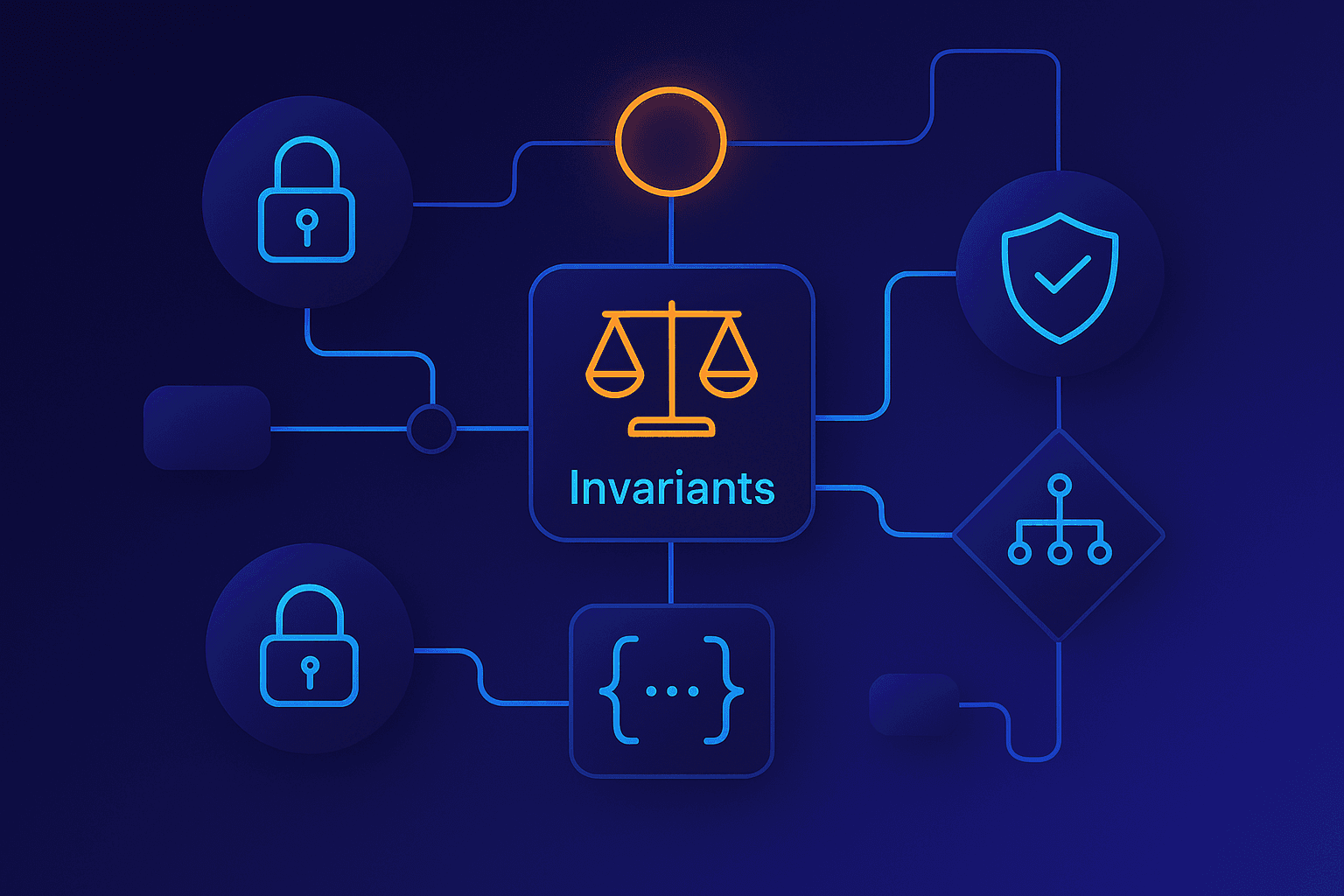
Understanding Business-Logic Invariants
Business-logic invariants are the rules and conditions that must consistently hold true within the application to maintain its integrity. They differ from general software bugs, which often stem from coding errors or misconfigurations. Invariants are crucial because they ensure that the business processes embedded in the software are executed correctly and consistently. For example, an invariant might dictate that a customer's account balance should never be negative. Violating this could lead to serious financial discrepancies and errors within the system.
Unlike general software bugs, business-logic issues arise from the misuse or misinterpretation of the application's business rules. These issues are often subtle and can go unnoticed until they cause significant problems. While a software bug might cause a function to crash or produce an error message, a business-logic flaw could lead to incorrect data processing without any immediate visible symptoms. This distinction is crucial when testing and debugging applications, as it requires a deeper understanding of the business context in which the software operates.
Invariants are integral to ensuring system reliability, as they act as safeguards against logical fallacies in the business processes. By defining strict business rules, we can prevent anomalies that might otherwise arise from unexpected inputs or actions. For instance, consider a scenario where a user is allowed to transfer funds between accounts. An invariant might specify that the total amount transferred should not exceed the available balance in the source account. By enforcing this rule programmatically, we can prevent unauthorized overdrafts and maintain financial integrity.
function transferFunds(sourceAccount, targetAccount, amount) {
    if (sourceAccount.balance >= amount) {
        sourceAccount.balance -= amount;
        targetAccount.balance += amount;
    } else {
        throw new Error("Insufficient funds");
    }
}
Traditional security catalogs like CWE (Common Weakness Enumeration) often miss business-logic invariants because they focus primarily on technical vulnerabilities, such as buffer overflows or SQL injection. While these are important, they don't capture the specific rules and conditions that govern the business processes within an application. This is why it's essential for developers and testers to have a thorough understanding of the domain-specific logic and to implement checks that ensure these invariants are consistently upheld.
The Role of Invariants in Security
In the realm of security, broken invariants can have profound implications. An invariant, by definition, is a condition that must hold true during the execution of a program. When these conditions are violated, it often leads to unintended behavior that can be exploited by malicious actors. For instance, if a financial application allows negative transactions where none should exist, it opens up vulnerabilities that could be exploited for financial gain. Thus, identifying and maintaining these invariants is critical in safeguarding against potential security breaches that standard vulnerability databases like CWE might overlook.
Invariants play a crucial role in preventing business-rule violations by ensuring that the core logic of applications remains intact. Consider a system managing user roles where the invariant requires that only admins can approve financial transactions. By enforcing this invariant, we can prevent unauthorized access and mitigate the risk of privilege escalation. Implementing invariant checks is a proactive approach, ensuring that business logic remains consistent and secure across various operations.
Comparing invariant checks to typical security measures like input validation and authentication reveals their unique importance. While conventional methods focus on external threats, invariants address internal logic consistency. For instance, typical security might involve validating email formats or passwords, whereas invariants ensure that a user's account balance cannot fall below zero after a transaction. This added layer of security is indispensable for maintaining the integrity of business rules within applications.
def process_transaction(user, amount):
    assert user.role == 'admin', "Only admins can process transactions"
    new_balance = user.balance + amount
    assert new_balance >= 0, "Balance cannot be negative"
    user.balance = new_balance
    return user.balance
Real-world scenarios highlight how invariants save the day by catching logic errors that could lead to significant vulnerabilities. Consider the infamous CVE-2021-44228, where a broken invariant in string processing led to a critical vulnerability. By maintaining invariants, we can reduce the attack surface and ensure our applications behave predictably under all conditions. This is not just about patching known vulnerabilities but ensuring the underlying logic is fortified against future threats.
Integrating Invariants into Pentestas
At Pentestas, we incorporate business-logic invariants directly into the core of our platform. This integration allows us to automatically monitor for violations that could indicate potential vulnerabilities, such as logical flaws or erroneous state transitions. Our platform supports custom invariant definitions that can be tailored to the specific needs of an application. By embedding these invariants into the platform, we enable continuous validation alongside traditional vulnerability scanning, ensuring that business logic remains robust and secure.
The architecture supporting these invariant checks is built on a microservices framework that allows for scalability and flexibility. Each invariant check is run as a separate service, allowing us to isolate and manage state across different parts of the application. These services communicate through a message broker, ensuring that any detected violations are logged and can trigger predefined responses. This asynchronous architecture ensures minimal impact on application performance, while maintaining real-time monitoring capabilities.
message Broker {
  invariant: 'TotalOrderAmount <= AccountBalance',
  action: logViolation,
  services: ['OrderService', 'AccountService']
}

service OrderService {
  checkInvariant: function(orderId) {
    const orderAmount = getOrderAmount(orderId);
    const accountBalance = getAccountBalance(orderId);
    if (orderAmount > accountBalance) {
      sendViolationMessage(orderId);
    }
  }
}
Setting up and maintaining invariants within Pentestas is streamlined through an intuitive interface that allows developers to define and manage these checks without delving into complex configurations. Our system automatically generates alerts when invariants are breached, providing detailed logs that help identify the root cause of the issue. This workflow ensures that business logic integrity is continuously verified, reducing the risk of silent failures that could go unnoticed until they manifest as significant security incidents.
Artificial intelligence plays a pivotal role in enhancing our invariant-checking capabilities. By leveraging machine learning models trained on historical data, Pentestas can identify patterns that suggest potential invariant breaches, even before they occur. This proactive approach allows us to recommend new invariants based on emerging threats, ensuring our platform evolves alongside the threat landscape. Examples of specific invariants include ensuring that TotalOrderAmount <= AccountBalance and validating user permissions across multi-tiered applications.
DOM Browser Verifiers: A Technical Deep Dive
DOM browser verifiers are specialized tools that monitor and validate the state of the Document Object Model (DOM) in real-time, ensuring that certain business logic invariants hold true. These verifiers function by embedding small JavaScript agents into web pages, which continuously assess the DOM structure and report any deviations from expected patterns. They operate silently in the background, triggering alerts when anomalies are detected, thereby catching bugs that standard CWE categorizations might miss. Their primary focus is on the dynamic interactions within the browser, providing an additional layer of scrutiny beyond static code analysis.
Integrating DOM verifiers within Pentestas' architecture involves seamlessly embedding them into our client's web applications. We utilize a combination of in-house scripts and open-source libraries to ensure that the verifiers are both lightweight and non-intrusive. Once deployed, these agents communicate with our backend systems via secure WebSocket connections, enabling real-time data collection and analysis. This setup allows us to maintain a low overhead while providing comprehensive monitoring capabilities. The integration process is streamlined to minimize client-side changes, ensuring a smooth deployment with minimal disruption.
The primary advantage of using DOM verifiers lies in their ability to enforce complex business logic invariants that are not easily captured by traditional security frameworks. For instance, verifiers can ensure that user interface elements behave consistently across different sessions or that specific DOM nodes are present only under valid conditions. This granular level of inspection helps identify subtle bugs and potential security vulnerabilities that could otherwise go unnoticed. Additionally, DOM verifiers provide valuable insights into the runtime behavior of web applications, making them an indispensable tool in our security arsenal.
function checkInvariant() {
  const loginButton = document.querySelector('#login-button');
  if (!loginButton) {
    console.warn('Invariant violation: Login button is missing');
    alert('Authentication elements are not loading correctly.');
  }
}

setInterval(checkInvariant, 5000); // Check every 5 seconds
Implementing DOM verifiers presents several technical challenges, including ensuring that the verifier scripts do not interfere with the normal operation of the website. This requires meticulous engineering to avoid conflicts with existing JavaScript code. Another challenge is maintaining performance; the verifiers must operate efficiently, even on resource-constrained devices. Furthermore, handling cross-browser compatibility is a non-trivial task, as different browsers may interpret or render DOM structures differently. These challenges necessitate a robust development and testing process, allowing us to fine-tune the verifiers for optimal performance and reliability.
Case Study: Preventing Negative Balance Errors
In one of our recent projects, we were tasked with ensuring that user account balances never went negative. This invariant was particularly crucial in a financial application where errors in balance calculations could lead to severe inconsistencies and potential losses. To implement this, we enforced checks at every transaction point, ensuring that each debit operation was preceded by a balance verification. This plan guaranteed that any transaction attempting to reduce the balance below zero was promptly rejected.
function debitAccount(userId, amount) {
    const balance = getAccountBalance(userId);
    if (balance - amount >= 0) {
        updateBalance(userId, balance - amount);
    } else {
        throw new Error('Transaction rejected: Insufficient funds');
    }
}
During implementation, we encountered challenges such as race conditions, where simultaneous transactions could bypass the balance check. To address this, we introduced locking mechanisms around critical sections of our code. These locks ensured that only one transaction could alter a user's balance at a time, preserving data integrity across concurrent operations. This approach reduced the likelihood of inconsistencies and maintained the invariant in all scenarios.
Post-implementation, the benefits were immediate. The frequency of support tickets concerning negative balance errors dropped significantly, and the system's reliability was enhanced. Our testing team simulated various edge cases, confirming that the invariant held across all scenarios. This case study underscored the importance of robust checks and concurrency management in financial application development.
Lessons Learned
One of the key lessons learned was the necessity of thorough testing and the implementation of locks to handle concurrency issues. This case highlighted the importance of considering all potential execution paths in transactional systems.
AI's Role in Enhancing Invariant Detection
Artificial Intelligence has become a pivotal ally in the quest to improve invariant detection and enforcement. By leveraging AI, we can scrutinize vast amounts of data to uncover subtle patterns that might indicate a breach of business logic rules. AI models are trained to understand the normal behavior of applications, allowing them to detect deviations that could signify potential vulnerabilities. This capability is essential because traditional rule-based systems often struggle to adapt to the dynamic nature of modern software environments.
At Pentestas, we utilize a variety of machine learning models that enhance our invariant detection capabilities. These models include decision trees and neural networks, which are particularly effective in identifying complex relationships and dependencies within the data. For instance, a decision tree might help identify an unexpected sequence of API calls that diverges from known safe patterns. By continuously training these models on new data, we improve their accuracy and adaptability, ensuring they remain effective as the software landscape evolves.
from sklearn.tree import DecisionTreeClassifier

# Sample data
X_train = [[0, 0], [1, 1]]
y_train = [0, 1]

# Initialize the model
model = DecisionTreeClassifier()

# Train the model
model.fit(X_train, y_train)

# Predict potential invariant breaches
predictions = model.predict([[2, 2]])
print(predictions)
AI's predictive power also extends to forecasting potential invariant breaches before they occur. This proactive approach is facilitated through anomaly detection mechanisms that flag unusual activities. For example, if a machine learning model predicts a high probability of a user bypassing a critical business rule, the system can alert developers to investigate further. Such predictions are invaluable in preemptively addressing issues that could otherwise lead to significant security incidents.
The integration of AI with manual reviews creates a robust feedback loop, enhancing the overall accuracy of our detection systems. Human analysts provide insights that refine AI models, while AI assists in pinpointing areas that require human attention. This synergy reduces the incidence of false positives, which are a common challenge in automated detection systems. Consequently, AI not only augments our team's capabilities but also ensures that our clients receive more reliable and precise assessments of their systems' security postures.
Ensuring Continuous Improvement
At Pentestas, our dedication to maintaining robust business-logic invariants involves a dynamic process of continuous monitoring. We employ a combination of real-time analytics and daily reports that help us identify anomalies in system behavior. By setting up alerts for deviations from expected patterns, we can swiftly address any issues before they escalate. This proactive approach is crucial for sustaining the integrity of our operations and ensuring that our applications perform reliably under all conditions.
Regular updates to invariant rules are imperative as business logic evolves. We periodically review and refine these rules, taking into account changes in user behavior and emerging threats. Keeping our invariants up-to-date ensures that we can effectively catch subtle bugs that might not be covered by standard vulnerability databases like CWE. This iterative process not only enhances our systems but also aligns with our commitment to delivering secure and reliable software.
Incorporating User Feedback
User feedback plays a critical role in our improvement cycle. By actively listening to our users, we gather valuable insights that inform our updates to invariant rules. This collaborative approach ensures that our solutions remain user-centric and effectively address real-world challenges.
Automated testing is another cornerstone of maintaining business-logic invariants. Our test suites are designed to simulate a wide range of scenarios, ensuring that invariants hold true across all potential use cases. By integrating these tests into our continuous integration pipeline, we can catch regressions early in the development process. This not only safeguards our codebase but also frees up our engineers to focus on more strategic tasks.
For organizations looking to enhance their own invariant checks, we recommend a few key strategies. First, establish a baseline of expected behavior and set up automated monitoring to detect deviations. Regularly review and update your invariant rules to reflect changes in your business environment. Finally, leverage user feedback to make informed adjustments, ensuring your solutions stay relevant and effective.
Limitations and Future Directions
Despite the strides made in business-logic invariant enforcement, several limitations remain. One of the primary challenges is the dynamic nature of business processes, which often leads to changing invariants that automated systems struggle to adapt to. While technologies like machine learning offer some promise, they are not yet fully reliable due to their dependency on large, high-quality datasets, which are often unavailable in specific business contexts. Moreover, the risk of false positives remains a significant hurdle, potentially leading to alert fatigue and oversight of critical issues.
Looking forward, we see numerous areas ripe for future research and development. One potential avenue is the integration of blockchain technology to enhance the traceability and immutability of invariant rulesets. Another promising direction is the application of natural language processing to better interpret and automate the updating of business rules as they evolve. These innovations could significantly reduce the manual overhead currently required, allowing for more agile responses to changing business needs.
Balancing Automation and Manual Oversight
While automation can greatly enhance efficiency, manual checks remain essential to ensure the nuanced understanding of business contexts is maintained. Automated systems should complement rather than replace human expertise, particularly in complex scenarios where business logic is not easily codified.
Emerging technologies like quantum computing and advanced data analytics hold the potential to revolutionize invariant detection. These technologies could offer unprecedented processing power and insights, allowing us to identify patterns and anomalies that were previously undetectable. However, the practical application of these technologies in invariant enforcement is still in its infancy and requires further exploration.
In conclusion, ongoing innovation in security practices is crucial as business logic becomes increasingly complex. By continually adapting our approaches and incorporating cutting-edge technologies, we can stay ahead of potential threats and ensure robust protection of business assets. Collaborative efforts across the industry will be key in developing solutions that effectively balance automated and manual processes, ultimately leading to more resilient security frameworks.
Try it on your stack
Free tier includes 10 scans/month on a verified domain. No credit card required.
Start scanning- Cache Deception and Cache Poisoning: Two Bugs That Look Like One
- JA3 / JA4 TLS Impersonation: Looking Like a Browser Down to the Cipher Suites
- Blind XXE: Why "It Parses XML" Is Never Enough Without an Out-Of-Band Oracle
- OAST Canaries: Catching Blind SSRF, Blind XXE, and Blind Command Injection

Alexander Sverdlov
Founder of Pentestas. Author of 2 information security books, cybersecurity speaker at the largest cybersecurity conferences in Asia and a United Nations conference panelist. Former Microsoft security consulting team member, external cybersecurity consultant at the Emirates Nuclear Energy Corporation.