Continuous Penetration Testing: The Complete Guide for 2026
Pentestas Team
Security Analyst
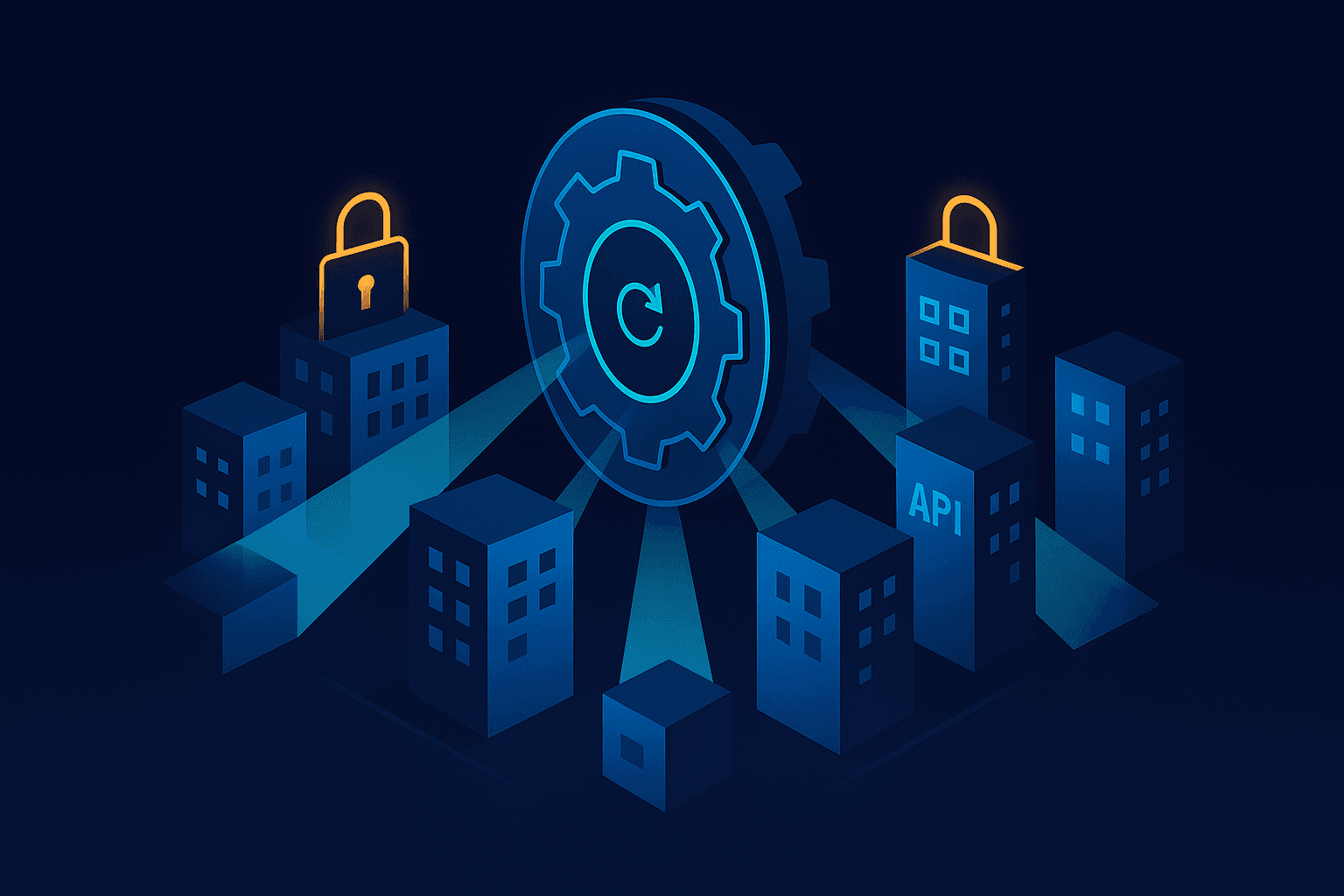
Here is the uncomfortable truth about the once-a-year penetration test: it is accurate for exactly one day. The morning after your tester hands over the PDF, an engineer merges a pull request, and your real attack surface quietly diverges from the report you just paid five figures for. Eleven months later, you commission another test and discover the vulnerabilities that have been live the entire time.
continuous penetration testing fixes that gap by changing the cadence, not just the tooling. Instead of a single point-in-time engagement, the full offensive playbook runs continuously — on every deploy, on a schedule, or on demand — and every finding is proven with a working exploit before it reaches you. This guide explains exactly how that works and how to adopt it.
💫 Key takeaways
- Point-in-time testing leaves ~350 days a year untested; continuous testing closes that window.
- A finding is not real until it is exploited — proof, not a status-code guess, is what makes continuous output trustworthy.
- A modern AI penetration testing system plans the attack with a model and confirms it with a deterministic engine.
- Done right, continuous testing lowers total cost while raising coverage and keeping you audit-ready year-round.
What Continuous Penetration Testing Actually Means
Continuous penetration testing is the practice of running real, exploit-driven security testing against your applications on an ongoing cadence rather than as a one-off project. The word that matters is continuous: the engine re-discovers your attack surface and re-runs the full battery of attacks every time your software changes, so your security posture is a live signal instead of an annual snapshot.
It is not a vulnerability scanner on a cron job. A scanner matches responses against a signature database and stops at “this looks vulnerable.” Continuous penetration testing goes the whole way: it chains weaknesses into a real attack, exploits them, and captures the proof — the exact request, the forged token, the rows pulled out of your database. That distinction — detection versus exploitation — is the entire reason the output is worth acting on.

An annual pentest tells you what an attacker could have reached last spring. Continuous testing tells you what they can reach right now.
Why Point-in-Time Testing Stopped Working
The threat, in current data:
- $4.88M — the average cost of a data breach, a record high and up 10% in a single year (IBM, Cost of a Data Breach 2024).
- ~20% of breaches now begin with vulnerability exploitation, a vector that jumped roughly 180% in 2024 and another 34% in 2025 to become one of the top routes to initial access (Verizon DBIR 2024–2025).
- Under a day — attackers routinely weaponise a newly disclosed vulnerability within 24 hours, and the exploitation window has compressed to under a week for high-priority flaws (VulnCheck; Mandiant M-Trends).
- 11-day median dwell time, yet the flaw that let the attacker in was frequently exploitable for far longer (Mandiant M-Trends 2024).
Against that clock, a test that runs once or twice a year verifies your attack surface for roughly two days out of 365. Every other day is unverified — and unverified is exactly where the loss happens.
Annual testing made sense when releases were rare. Today the average engineering team deploys many times a week, and each deploy is a chance to introduce a broken access-control check, a new injectable endpoint, or a regression that un-fixes last year’s finding. The point-in-time model has three structural failures:
- The blind months. One test per year means roughly 350 days where new code ships with zero adversarial testing.
- Finding decay. The report is most accurate the day it is delivered and least accurate the day before the next one — precisely when your risk is highest.
- Regression amnesia. A refactor quietly reintroduces an old vulnerability, and nobody notices until the next annual engagement, if at all.
Continuous testing inverts all three: new code is tested as it ships, the “report” is always current, and the full surface is re-checked every cycle so regressions surface immediately.
How a Continuous Penetration Testing Engine Works
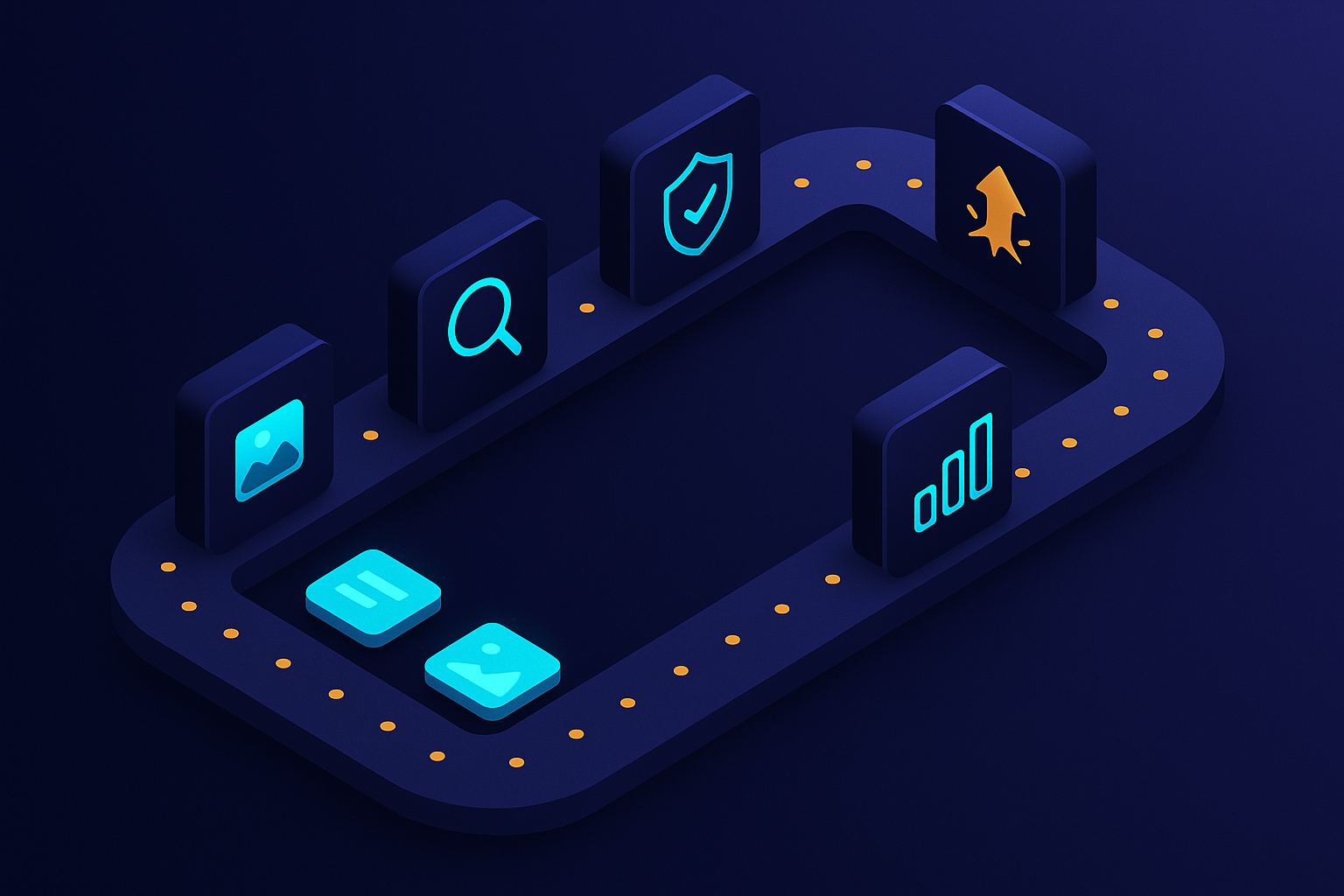
Under the hood, each cycle runs the same disciplined loop a senior tester would — and then runs it again next time your code changes. At Pentestas this is penetration testing with AI for the reasoning and a deterministic engine for the exploitation and verification. The loop has five stages:
1. Continuous discovery
You cannot test what you have not found. The crawler and API miner map the live attack surface every cycle — new endpoints, new parameters, single-page-app routes extracted from JavaScript bundles, and freshly shipped features. Discovery never stops, because your surface never stops moving.
2. AI-planned attack
Specialised agents — for injection, access control, authentication, server-side request forgery, and business logic — probe each surface with context-aware payloads and chain weaknesses the way a human attacker would. The model reasons about each response and decides what to try next instead of firing a static checklist.
3. Real exploitation
A candidate vulnerability is not a finding until it is exploited. The engine extracts data through SQL injection, forges tokens to reach protected functions, and reaches internal services through SSRF — capturing the evidence as it goes. Safe, non-destructive payloads only: anything that would drop a table or take a service offline is blocked at the HTTP layer.
4. Verification & reporting
Before any high or critical finding reaches your dashboard, an independent verifier replays the exploit. If it cannot be reproduced, the finding is demoted. That fail-closed accuracy gate is the reason teams can wire continuous output into CI without being buried in false positives.
5. Retest & track
Push a fix and the next cycle re-runs the exact exploit to confirm it. Genuinely remediated issues close themselves; regressions reopen automatically. The result is a continuous, dated history of your security posture.
Detection Is Half a Finding; Exploitation Is the Product
The single biggest difference between a continuous scanner and continuous penetration testing is proof. A scanner that sees a database error says “possible SQL injection” and moves on. A real engine proves it: it injects a payload that casts a subquery into a type error, reads the leaked value back out, and dumps the version, the database name, the table list, and sample rows — including, on a vulnerable target, the admin credentials and the is_admin flag.
That matters for two reasons. First, it kills false positives: a finding that ships with a replayable exploit is, by definition, real. Second, it communicates impact your leadership actually understands — “we extracted these customer records” lands very differently from “the scanner flagged a 500 error.” This is the core philosophy of the platform: always attack beyond detection.

Coverage That Compounds Over Time
A useful way to picture the difference is as area under a curve. The annual model is a single tall spike of coverage once a year and a flat line of zero in between. Continuous testing is a filled band: every cycle re-covers the whole surface and extends coverage to whatever shipped since the last run. Over a year, the continuous band covers vastly more of your actual risk than the annual spike — and the gaps where breaches happen simply close.

How to Roll Out Continuous Penetration Testing
Adoption is straightforward if you sequence it sensibly:
- Start with one high-value target. Point the platform at your most important application, supply test credentials, and let the first authenticated cycle establish a baseline.
- Triage the baseline once. The first run surfaces the backlog that has accumulated since your last manual test. Fix the criticals, mark them remediated, and let retest confirm.
- Wire it into the pipeline. Trigger a cycle on deploy and treat verified high/critical findings like failing tests — they block or page, low-severity ones go to the backlog.
- Expand scope. Add APIs, staging environments, and additional products. For internal apps, an outbound-only agent lets the platform test behind your firewall without a VPN.
Because findings arrive with proof and remediation guidance written for the developer who has to fix them, the workflow feels less like a security audit and more like a very thorough test suite that happens to think like an attacker.
What to Look For When You Buy
Not all “continuous” offerings are equal. If you are evaluating pentesting as a service, weigh these:
- Does it exploit or just detect? Demand to see a real exploit with reproducible evidence, not a severity label on a pattern match.
- What is the false-positive story? Ask how findings are verified before they reach you. Without an accuracy gate, continuous output is continuous noise.
- Is retest included? Verifying a fix should be a built-in part of the loop, not a paid add-on.
- Can you choose the AI model? The strongest platforms support penetration testing with Claude and penetration testing with DeepSeek and let you bring your own key, so reasoning runs on a model you control and your data stays yours.
- Is it safe for production? Non-destructive payloads should be enforced, not promised.

For a B2B SaaS pentest in particular, continuity is not a luxury — tenant isolation has to be re-proven on every release, and that is exactly the kind of repetitive, high-stakes verification a continuous engine does better than an annual human engagement ever could.
See continuous penetration testing in action
Point Pentestas at a target and watch the first verified, exploit-backed findings land within minutes. No procurement cycle, no two-week wait.
Explore the platform →
Alexander Sverdlov
Founder of Pentestas. Author of 2 information security books, cybersecurity speaker at the largest cybersecurity conferences in Asia and a United Nations conference panelist. Former Microsoft security consulting team member, external cybersecurity consultant at the Emirates Nuclear Energy Corporation.