Continuous Penetration Testing for SOC 2, ISO 27001 & PCI DSS: Always Audit-Ready
Pentestas Team
Security Analyst

Compliance and security are not the same thing, but penetration testing is where they overlap most cleanly. Every major framework — SOC 2, ISO 27001, PCI DSS, HIPAA — wants proof that you actively look for vulnerabilities and fix them. The traditional answer is a once-a-year pentest report stapled to the audit binder. The modern answer is continuous evidence that never goes stale.
💫 Key takeaways
- Auditors want evidence of ongoing testing and remediation, not a single dated PDF.
- Continuous penetration testing produces a dated, verified trail year-round — no pre-audit scramble.
- Automatic retest turns “we fixed it” into provable, timestamped evidence the remediation worked.
- The same continuous program maps cleanly across SOC 2, ISO 27001, and PCI DSS requirements at once.
What Auditors Actually Want
Read past the framework jargon and the ask is consistent: show us that you (1) regularly test for vulnerabilities, (2) triage what you find by severity, (3) remediate it on a defined timeline, and (4) verify the fix. A single annual pentest demonstrates step one weakly — it proves you tested once — and says nothing about the other three for the other 364 days.
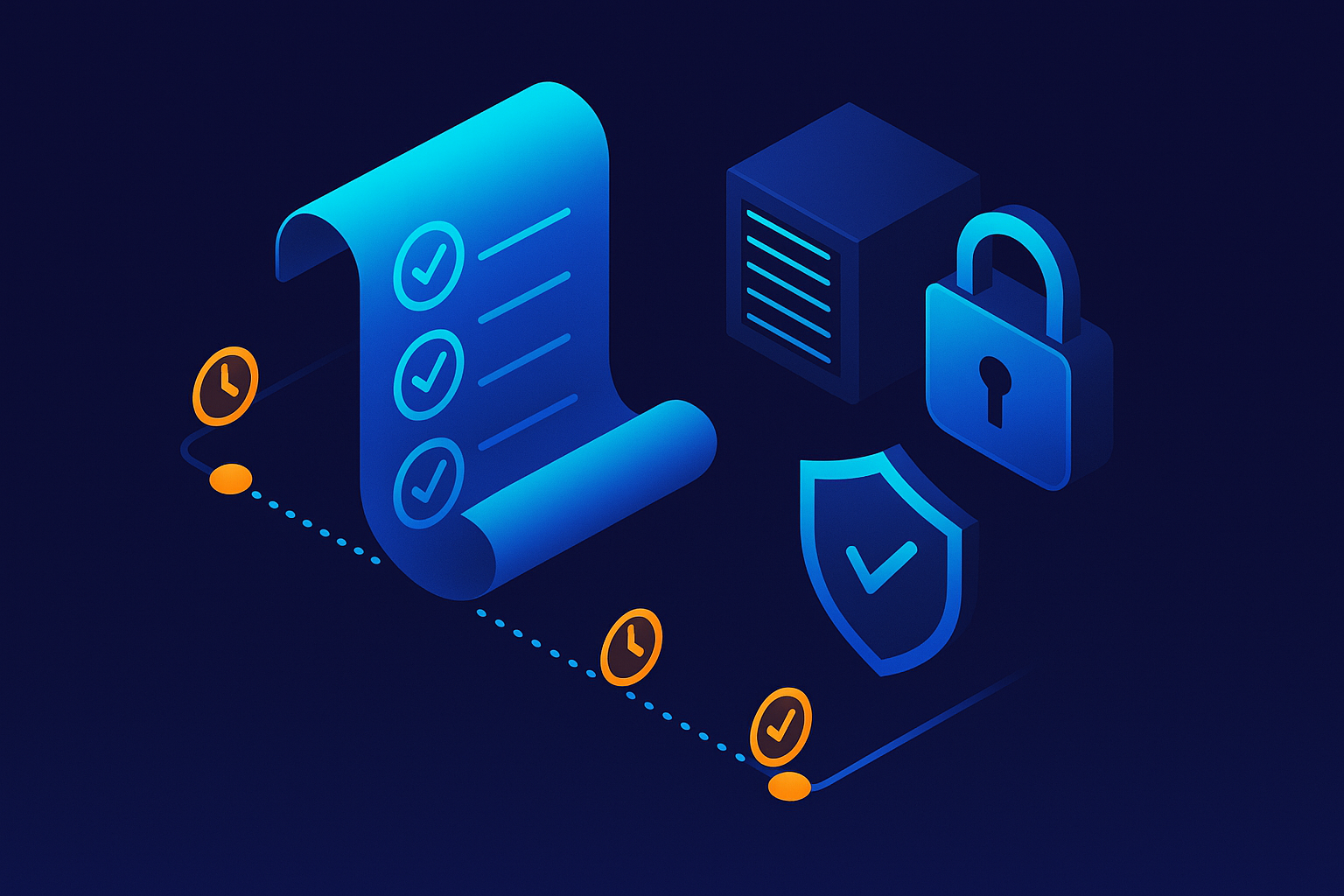
Continuous penetration testing demonstrates all four, continuously. Every cycle is a dated test. Every finding carries a severity and a reproducible proof. Every remediation is re-tested and the verification is recorded. The audit trail builds itself.
The Annual-Pentest Compliance Trap
The threat, in current data:
- $4.88M — the average cost of a data breach, a record high and up 10% in a single year (IBM, Cost of a Data Breach 2024).
- ~20% of breaches now begin with vulnerability exploitation, a vector that jumped roughly 180% in 2024 and another 34% in 2025 to become one of the top routes to initial access (Verizon DBIR 2024–2025).
- Under a day — attackers routinely weaponise a newly disclosed vulnerability within 24 hours, and the exploitation window has compressed to under a week for high-priority flaws (VulnCheck; Mandiant M-Trends).
- 11-day median dwell time, yet the flaw that let the attacker in was frequently exploitable for far longer (Mandiant M-Trends 2024).
Against that clock, a test that runs once or twice a year verifies your attack surface for roughly two days out of 365. Every other day is unverified — and unverified is exactly where the loss happens.
Plenty of teams pass their audit with an annual test and a clean conscience — right up until the gap between “compliant” and “secure” bites them. The annual model creates a predictable scramble: the audit looms, you book a pentest, you fix what it finds in a rush, you get the letter, and then testing stops for another year while your real risk climbs.
Passing an annual audit proves you were testable on one day. It does not prove you were secure on the other 364.
Worse, the annual cadence couples your security testing to your audit calendar instead of your release calendar — which means the testing happens least often exactly when your code is changing most.
How Continuous Testing Produces Compliance Evidence
With continuous penetration testing wired into your pipeline, compliance evidence becomes a byproduct of normal engineering. Each deploy triggers a cycle; each cycle is logged with a timestamp, a scope, the findings, their severities, and the verification status. This is penetration testing with AI generating audit-grade documentation automatically rather than a consultant assembling it by hand once a year.

When the auditor asks for evidence of your testing program, you do not schedule anything. You export a dated history showing continuous testing, severity-ranked findings, remediation timelines, and re-test verification — exactly the four things they wanted, already assembled.
Mapping One Program to Many Frameworks
The efficiency win is that a single continuous program satisfies overlapping requirements across frameworks simultaneously:
- SOC 2 (CC4.1, CC7.1) — ongoing monitoring and vulnerability identification, evidenced by the continuous test history.
- ISO 27001 (A.12.6.1, A.8.8) — technical vulnerability management with a demonstrable, dated process.
- PCI DSS (Req. 11.3/11.4) — regular penetration testing and prompt remediation, with re-test as proof.
- HIPAA — the evaluation and risk-analysis expectations of the Security Rule, backed by continuous evidence.
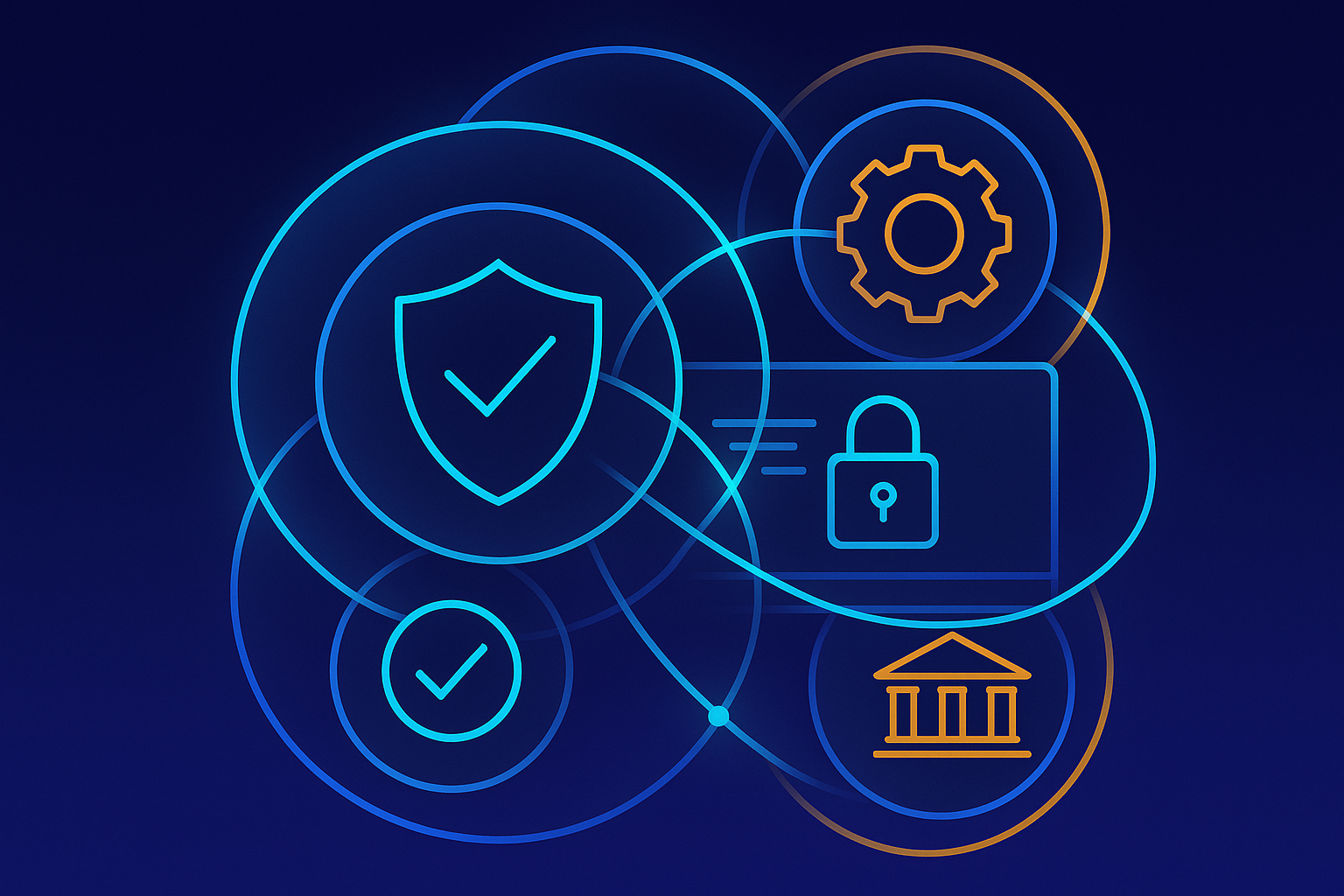
Instead of running a separate exercise per framework, the same continuous evidence stream maps to all of them — one program, many checkboxes ticked.
Retest Is the Evidence Auditors Love Most
The most under-appreciated compliance artefact is proof that a fix actually worked. Saying “we remediated finding #214” is an assertion; showing that the exact exploit was re-run after the fix and no longer succeeds is evidence. Continuous penetration testing makes retest a built-in part of the loop: mark a finding fixed, and the next cycle replays the original exploit and records the verified-closed result with a timestamp.

That closed-loop evidence — found, fixed, re-tested, verified — is precisely the narrative an auditor wants to see, and it is generated automatically rather than reconstructed from memory at audit time.
Staying Audit-Ready Year-Round
The end state is a security posture that is always audit-ready. There is no pre-audit pentest to book, no two-week wait, no scramble to fix a backlog before the assessor arrives — because the testing has been running, and the evidence has been accumulating, the entire time. For a B2B SaaS pentest tied to enterprise procurement, this is transformative: when a prospect’s security questionnaire asks how often you test, “continuously, with verified evidence” closes deals that “annually” stalls.
Continuous penetration testing offered as pentesting as a service makes that posture affordable for teams without a dedicated compliance engineer — and because the platform supports penetration testing with Claude and penetration testing with DeepSeek with bring-your-own-key, even the AI reasoning behind your evidence stays under your control. An AI penetration testing system that documents itself is the rare security investment that pays for its own audit prep.
Be audit-ready every day, not once a year
Continuous penetration testing builds your SOC 2, ISO 27001 and PCI DSS evidence automatically — dated tests, ranked findings, and verified re-tests, year-round.
See how it works →
Alexander Sverdlov
Founder of Pentestas. Author of 2 information security books, cybersecurity speaker at the largest cybersecurity conferences in Asia and a United Nations conference panelist. Former Microsoft security consulting team member, external cybersecurity consultant at the Emirates Nuclear Energy Corporation.