Continuous Penetration Testing vs. Traditional: Coverage, Cost, and the Gap That Bites
Pentestas Team
Security Analyst
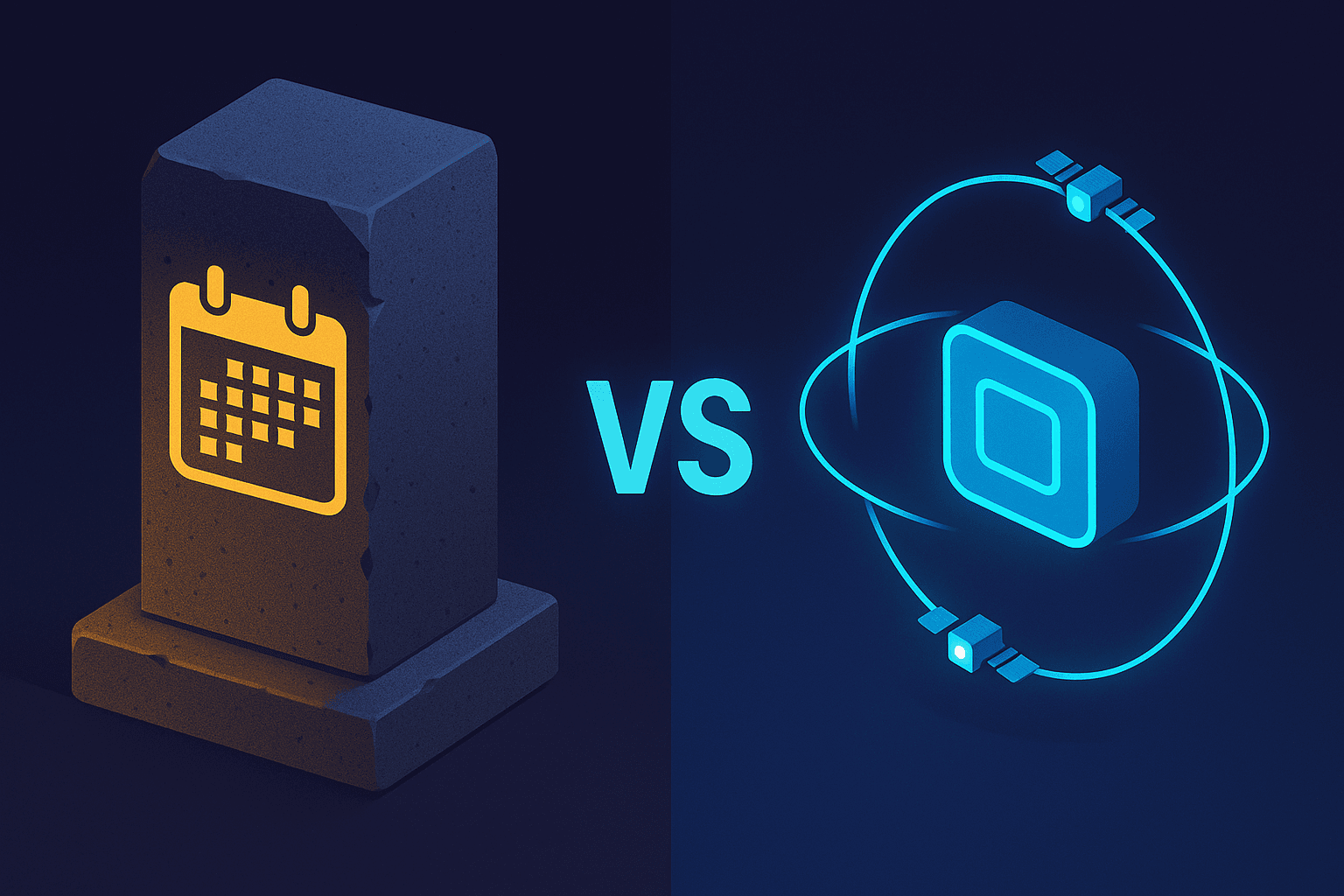
Every security leader eventually runs this comparison, usually the week before a board meeting or an audit. The framing that actually matters is not “automated versus manual” — it is cadence. A traditional pentest answers “were we secure on the day we tested?” Continuous penetration testing answers “are we secure right now?” Those are very different questions, and the gap between them is where most breaches live.
💫 Key takeaways
- Traditional testing is a snapshot; continuous testing is a stream. The difference is the months in between.
- Findings decay: a report is most accurate the day it ships and least accurate the day before the next one.
- On total cost of ownership, a continuous subscription usually beats a single annual engagement — while covering far more of the year.
- Traditional still wins for deep manual creativity, novel logic flaws, and signed attestation letters. The best answer is often both.
Two Models, One Question: When Do You Find Out?
Picture a timeline. The traditional model places a single bright dot once a year — the test window — with long dark gaps on either side. Continuous testing draws an unbroken line. A vulnerability introduced in March is found in March under the continuous model; under the annual model it may not be found until next year’s test, if the tester happens to look at the same endpoint.
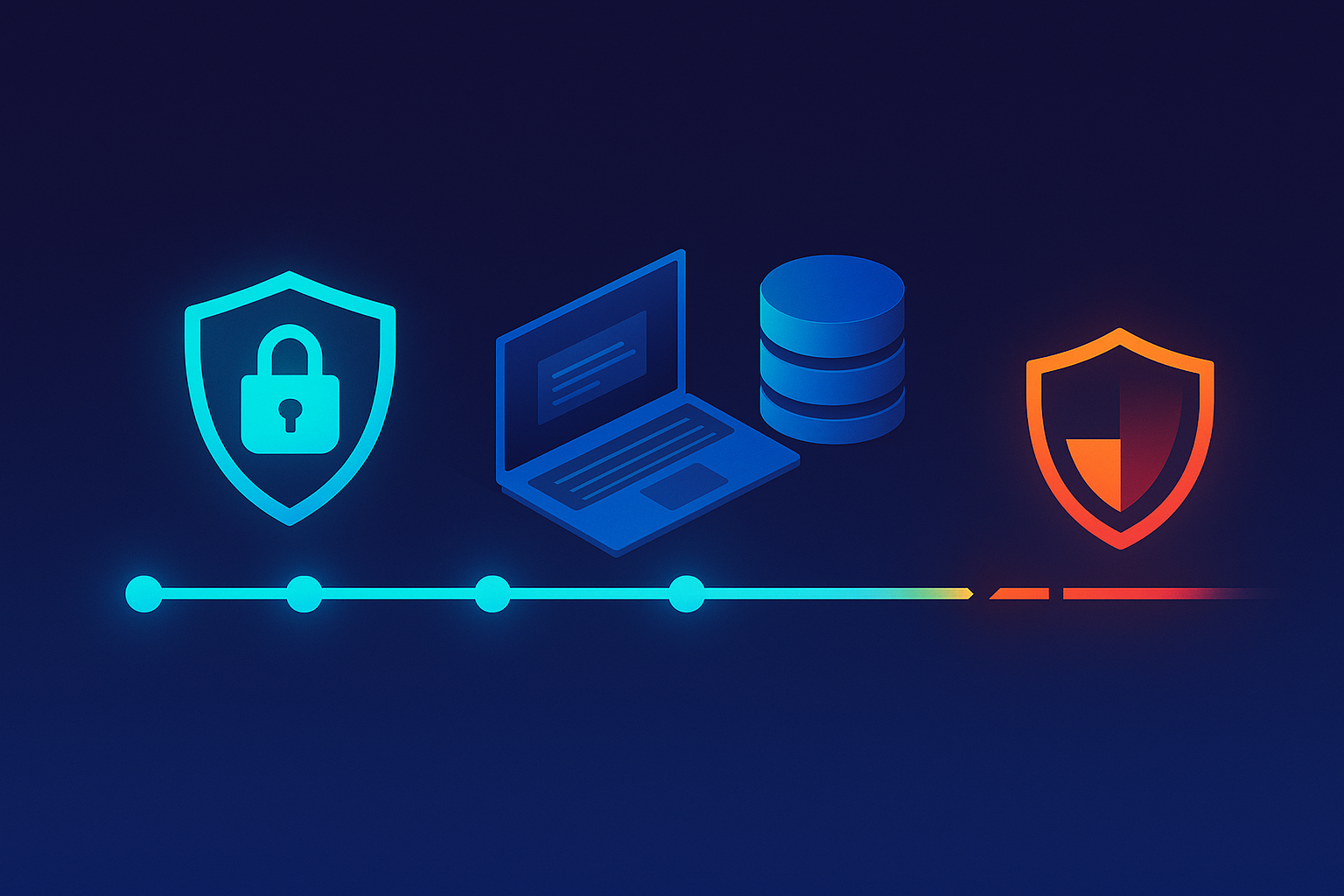
This is the crux of the comparison. Both models can find the same bug. Only one of them finds it before it has been exploitable in production for eleven months.
The Finding-Decay Problem
Security reports have a half-life. The day a traditional pentest is delivered, it is an accurate map of your risk. Then code ships. Each release adds endpoints, changes auth logic, and occasionally reintroduces a fixed bug. By month eleven, the report describes an application that no longer exists, and your real risk has quietly climbed back up — right before you commission the next test that “resets” the curve.
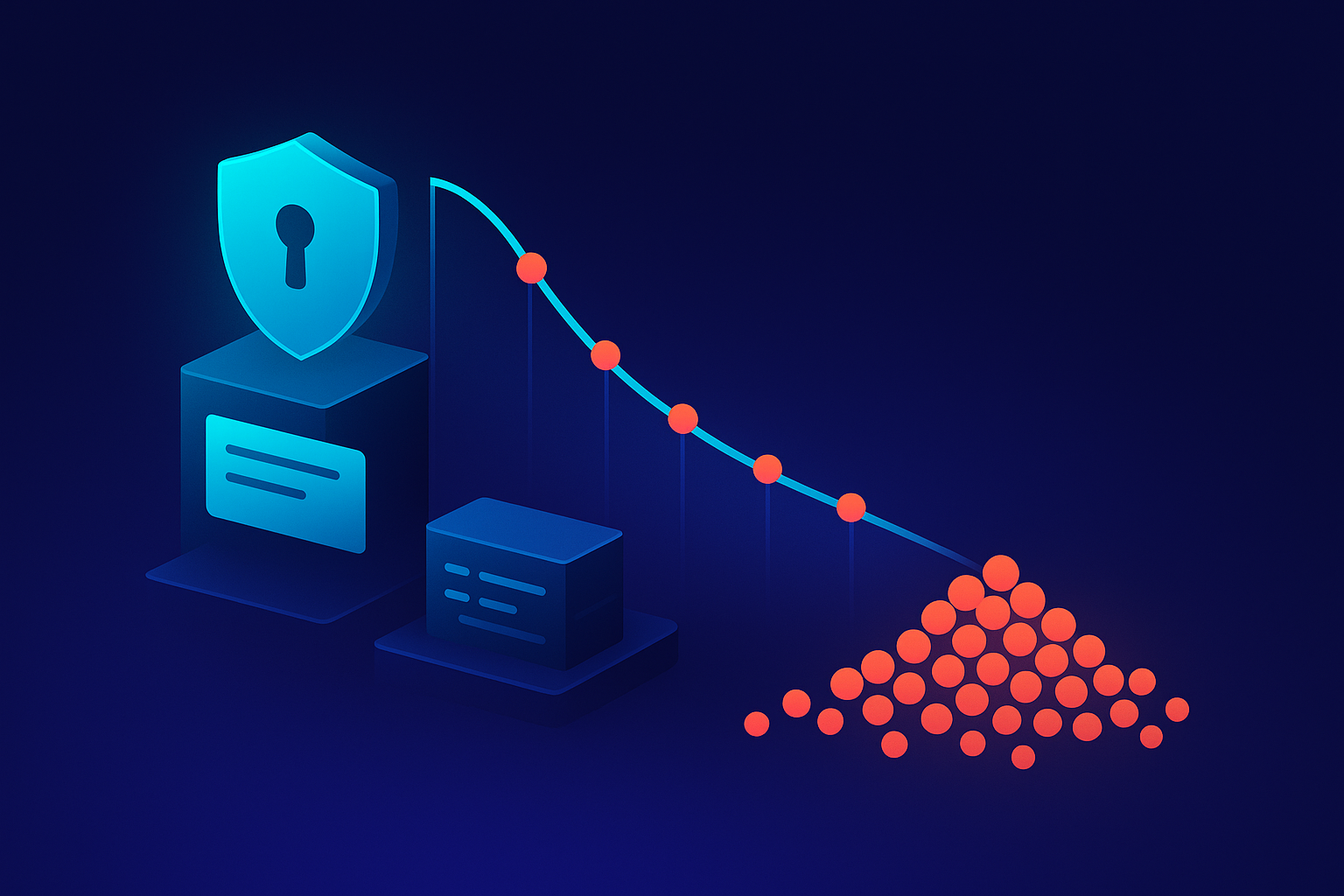
Continuous penetration testing flattens that sawtooth. Because every release is tested as it ships, risk never gets the chance to accumulate in the dark. This is where penetration testing with AI shines: the cost of re-running the full playbook on each deploy is low enough to actually do it every time, which is precisely what a human team cannot do economically.
Coverage: Snapshot vs. Stream
A two-week manual engagement is necessarily time-boxed. Testers prioritise, sample, and stop when the clock runs out — world-class within scope, but a single pass. A continuous engine re-covers the entire surface every cycle and never gets bored on hour forty. Think of one application lit by a single narrow spotlight versus the same application under continuous floodlights.
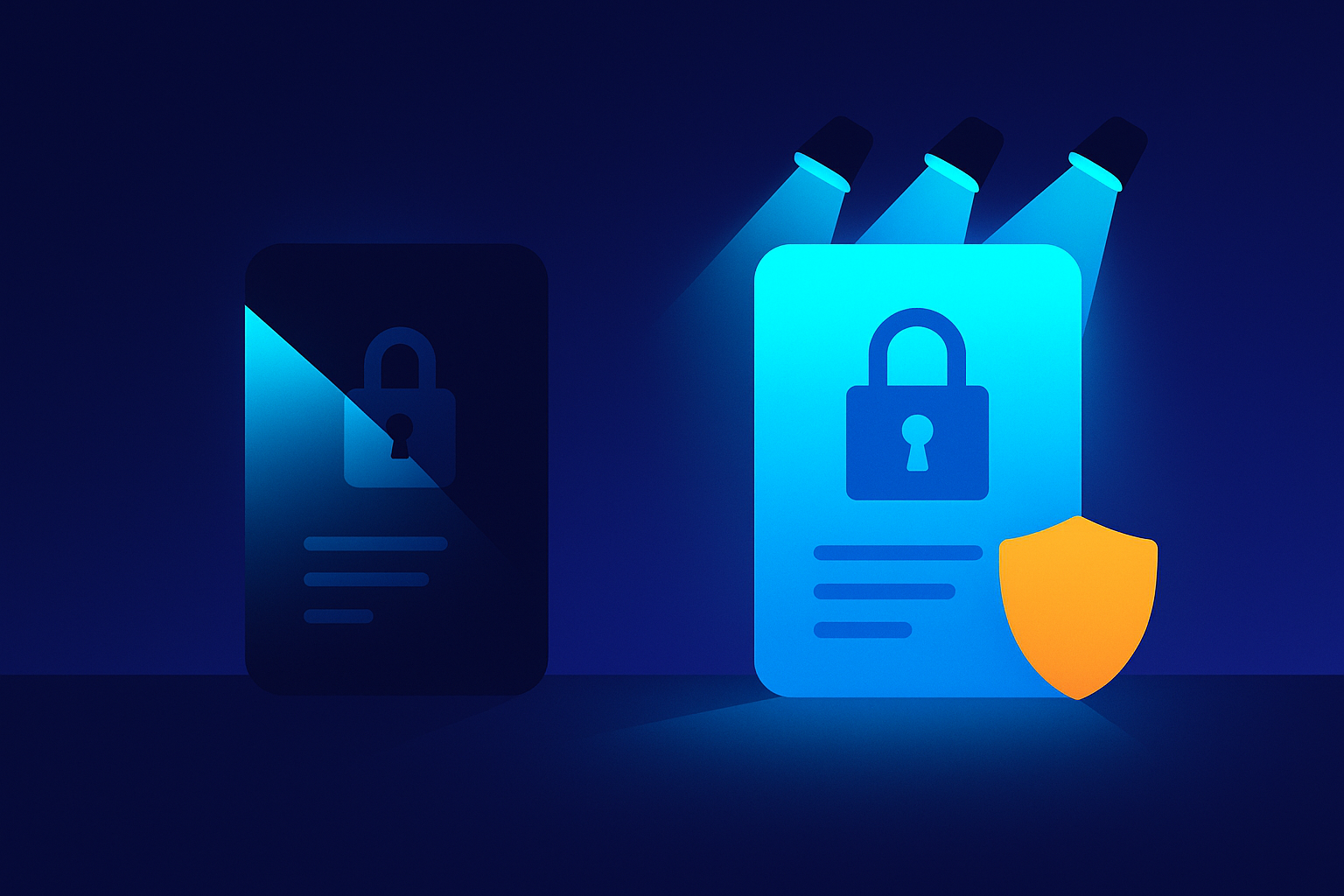
Neither is strictly “more thorough” in a single pass — a brilliant human may go deeper on a specific flow than any engine. But across a year, breadth times frequency wins decisively, and the engine never forgets to re-check the endpoint it tested last month.
The Real Cost Comparison
Sticker price is misleading. A traditional engagement runs roughly $15,000–$40,000 per application per year and produces one report. But the honest figure is total cost of ownership, which has to include the risk carried during the blind months — the breaches, incident response, and customer churn that happen in the gaps.

Continuous penetration testing delivered as pentesting as a service starts at $79/mo and scales with scope, typically landing well under the annual figure while covering the whole year instead of two weeks of it. When you add the avoided risk of the blind months, the math rarely favours the annual-only model. Run it honestly for your own surface and the spreadsheet usually makes the decision for you.
Where Traditional Testing Still Wins
The threat, in current data:
- $4.88M — the average cost of a data breach, a record high and up 10% in a single year (IBM, Cost of a Data Breach 2024).
- ~20% of breaches now begin with vulnerability exploitation, a vector that jumped roughly 180% in 2024 and another 34% in 2025 to become one of the top routes to initial access (Verizon DBIR 2024–2025).
- Under a day — attackers routinely weaponise a newly disclosed vulnerability within 24 hours, and the exploitation window has compressed to under a week for high-priority flaws (VulnCheck; Mandiant M-Trends).
- 11-day median dwell time, yet the flaw that let the attacker in was frequently exploitable for far longer (Mandiant M-Trends 2024).
Against that clock, a test that runs once or twice a year verifies your attack surface for roughly two days out of 365. Every other day is unverified — and unverified is exactly where the loss happens.
This is not a eulogy for manual testing. There are things a senior human still does best:
- Novel, creative logic flaws that require imagining a business workflow no checklist anticipates.
- Deep, narrative attack chains across systems that benefit from human intuition and patience.
- Signed attestation letters from a credentialed firm, which some enterprise contracts and regulators still specifically require.
- Physical, social-engineering, and red-team engagements that go well beyond application security.
The mature answer for most organisations is a hybrid: continuous penetration testing as the always-on baseline that catches the 95% of issues that recur with every release, plus a periodic deep manual engagement for the creative 5% and the signed letter. Continuous testing makes that annual engagement better, too — the human starts from a surface that is already clean of the obvious, and spends their expensive hours on the hard, interesting problems.
The Verdict
If you ship rarely and need a signed letter once a year, traditional testing alone may be enough. If you ship continuously — and especially if you are running a B2B SaaS pentest where tenant isolation must hold on every release — the annual-only model leaves you exposed for the eleven months that matter most. The strongest posture is continuous as the foundation, manual as the periodic deep dive.
The good news is you do not have to choose blindly. A modern AI penetration testing system makes continuous testing cheap enough to run on every deploy and accurate enough to trust — with penetration testing with Claude or penetration testing with DeepSeek under the hood and your own key if you want it. Start there, and add the human deep dive where it earns its keep.
Run the comparison on your own surface
Start continuous penetration testing on one target and see how much it finds in the first cycle — then decide where a manual engagement still adds value.
Try the platform →
Alexander Sverdlov
Founder of Pentestas. Author of 2 information security books, cybersecurity speaker at the largest cybersecurity conferences in Asia and a United Nations conference panelist. Former Microsoft security consulting team member, external cybersecurity consultant at the Emirates Nuclear Energy Corporation.